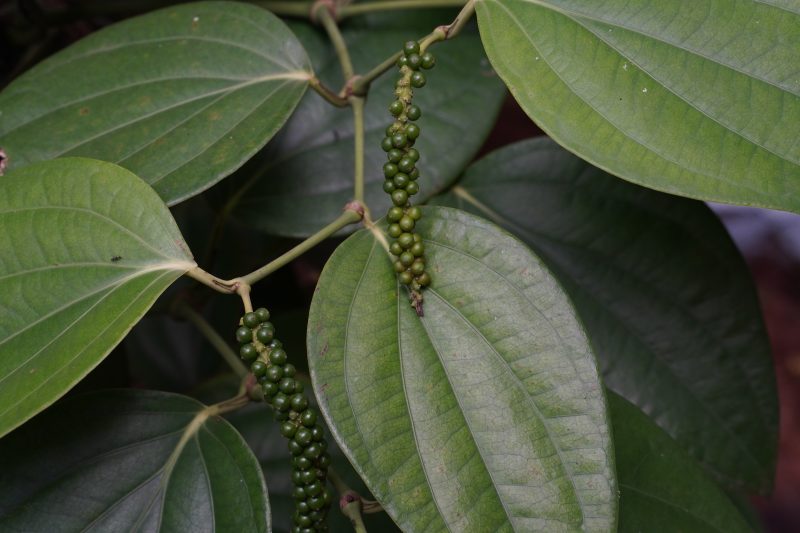
Cinnamon gets the fame, but gammiris (Piper nigrum) built empires too — and Sri Lankan black pepper is quietly among the world's best, prized for a piperine content that often exceeds Indian and Vietnamese crops. In the village medicine chest, pepper is not a seasoning at all: it is the warming engine of remedies for colds, coughs and sluggish digestion, and modern pharmacology has given its main alkaloid a surprisingly busy second career.
Botanical and Cultural Background
Black pepper is a perennial climbing vine of the Piperaceae family, trained up jak, kapok and glirisidia trees across Sri Lanka's mid-country spice gardens. Green, black and white peppercorns are all the same fruit at different stages: black pepper is the whole unripe fruit boiled briefly and sun-dried until the skin blackens and wrinkles. That skin carries the aromatic oils; the seed carries the fire.
Traditional Uses in Sri Lankan Medicine
Pepper is a cornerstone of the warming (ushna) end of the Sri Lankan pharmacy:
- Colds and fevers — crushed peppercorns join coriander (koththamalli) in the island's default fever tea, taken hot to promote sweating.
- Coughs — a pinch of pepper powder in bee honey, licked slowly, is the classic home cough remedy.
- Digestion — pepper stimulates appetite and digestive fire (agni); it appears in countless digestive formulations, including the famous trikatu blend of pepper, long pepper and ginger.
- As a carrier — Ayurveda has long added pepper to other remedies to strengthen their effect, an intuition modern science would vindicate.
What the Research Shows
Pepper's principal alkaloid, piperine, is one of the best-studied spice compounds. Reviews document digestive-stimulant effects — increased secretion of digestive enzymes, faster gastric emptying — along with antioxidant and anti-inflammatory activity in animal models (Srinivasan, 2007; Butt et al., 2013).
Its most famous property is bioavailability enhancement. A frequently cited human study reported that 20 mg of piperine dramatically increased blood levels of curcumin, the poorly absorbed pigment of turmeric (Shoba et al., 1998) — the origin of the pepper-with-turmeric advice now printed on supplement labels worldwide. Honesty requires a caveat: the eye-catching "2000%" figure from that small study has not been consistently reproduced, and later trials show variable results. The underlying mechanism, though — piperine slowing the enzymes that break down other compounds — is genuine, which is precisely why it can also interfere with pharmaceutical drugs.
How Gammiris Is Prepared
For a cold-and-fever tea, lightly crush a teaspoon of peppercorns with a tablespoon of coriander seed, simmer ten minutes, and drink hot with jaggery. For coughs, mix a quarter-teaspoon of fine pepper powder into a spoon of bee honey. In cooking, add whole or coarsely cracked pepper near the end of cooking — long boiling drives off the aromatic oils and leaves only heat.
Safety and Precautions
As a spice, pepper is safe for virtually everyone. Concentrated piperine supplements are a different matter: because piperine inhibits drug-metabolising enzymes, it can raise blood levels of medicines including some anticonvulsants, beta-blockers and blood thinners — anyone on regular medication should check with a doctor before taking piperine supplements. Large doses of pepper on an empty stomach can irritate, and pepper is traditionally moderated in cases of gastritis and ulcers.

Comments (0)
Leave a Comment