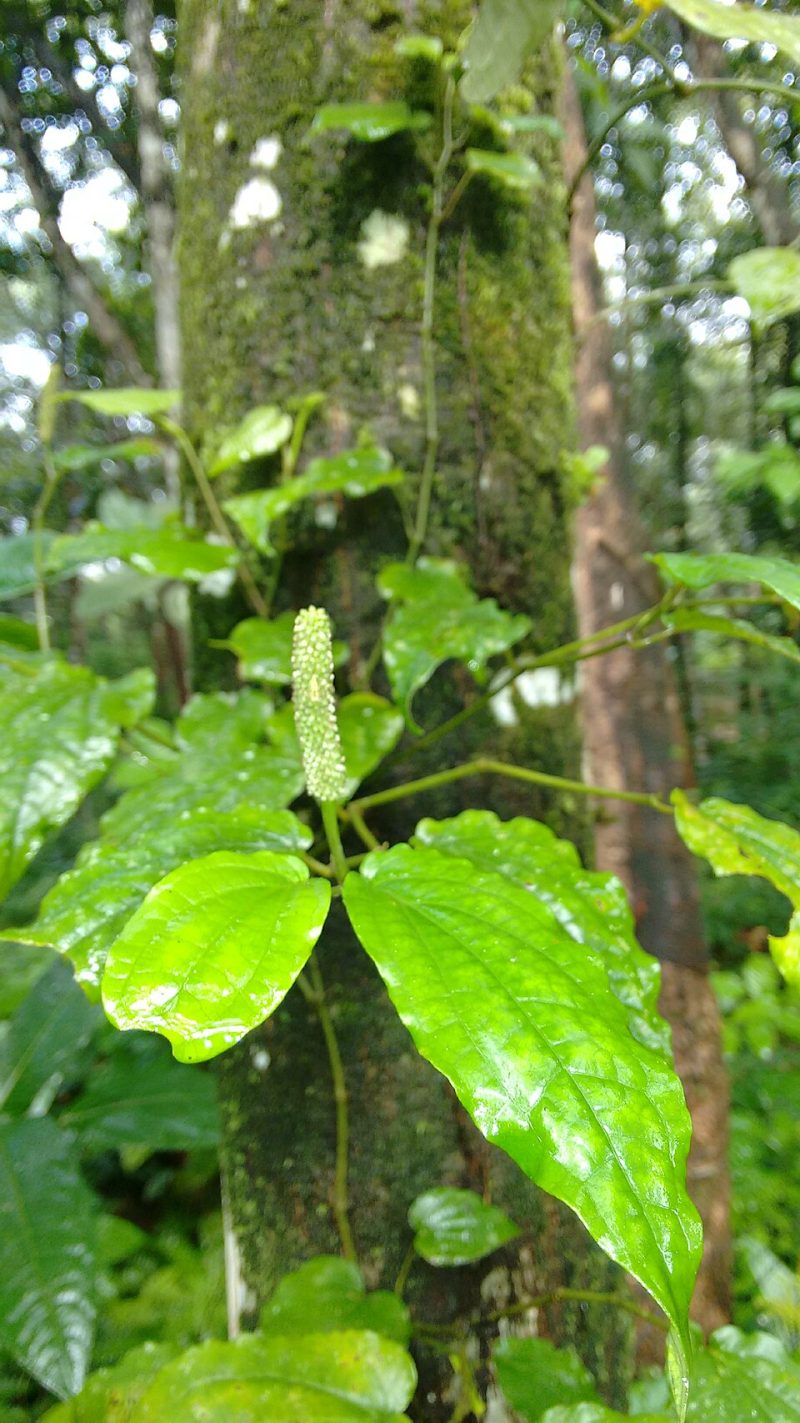
Thippili (Piper longum) looks like a small grey catkin rather than a pepper, but one taste settles the question: it is intensely, lingeringly pungent. Long pepper was a prized commodity in the ancient spice trade — it reached Rome before black pepper did — and in Ayurveda it is classed as a rasayana for the lungs and digestion.
Botanical and Cultural Background
Thippili is a slender aromatic climber of the Piperaceae family, the same family as black pepper and betel. What is harvested is not a single seed but the whole fruiting spike, a cylindrical structure of many tiny fruits fused together, picked while still green and dried until grey-black.
It has an old place in Sri Lankan and South Asian medicine, and appears in the classical Ayurvedic combination Trikatu — long pepper, black pepper and ginger — used to stimulate digestion.
Traditional Uses in Sri Lankan Medicine
Cough and congestion
Thippili is classed as warming, and traditionally used where a cough is accompanied by thick, cold, heavy phlegm. A pinch of powder with bee honey is the standard household form.
Digestion
It is used to stimulate what Ayurveda calls agni, the digestive fire — meaning appetite, digestion and absorption — and for bloating and sluggish digestion.
In Trikatu
Combined with black pepper and ginger, thippili forms one of Ayurveda's most-used digestive formulations.
What the Research Shows
Piper longum is chemically well characterised. Its main alkaloid is piperine, alongside piplartine (piperlongumine) and related compounds. Research has examined anti-inflammatory, antioxidant, antimicrobial and hepatoprotective activity, largely in laboratory and animal models.
The most robust finding concerns something other than the traditional uses: piperine is a well-documented bioavailability enhancer. It inhibits certain drug-metabolising enzymes and transporters, which means it can increase blood levels of substances taken with it — the reason piperine is added to curcumin supplements. This is real and reproducible, and it is also the source of thippili's most practical risk (see below).
For asthma and chronic cough, human clinical evidence is limited. Traditional use is long-standing; proof of clinical benefit in people is not established, and thippili should not be described as curing asthma.
How Thippili Is Prepared
With honey: A small pinch of powdered thippili mixed into a teaspoon of bee honey.
Thippili milk: A pinch of powder simmered in milk, sometimes with turmeric, taken at night during a cold.
Trikatu: Equal parts thippili, black pepper and ginger powder, taken in small quantities before meals.
Quantities are deliberately small. Thippili is a medicine used by the pinch, not the spoon.
Safety and Precautions
The bioavailability effect is a genuine drug-interaction risk. Because piperine can raise blood levels of medicines taken at the same time, regular medicinal use of thippili alongside prescription drugs should be discussed with a doctor. For medicines with a narrow safety margin, an unintended increase in blood level matters.
Thippili is strongly heating. Overuse commonly causes heartburn, acid reflux and burning, and it can aggravate gastritis or ulcers. People who already suffer from acidity should be cautious.
Avoid medicinal quantities during pregnancy. Do not use it as a substitute for asthma medication — asthma can be fatal and a prescribed inhaler is not optional. Claims that thippili causes weight loss are not supported by good evidence and are best ignored.



Comments (0)
Leave a Comment