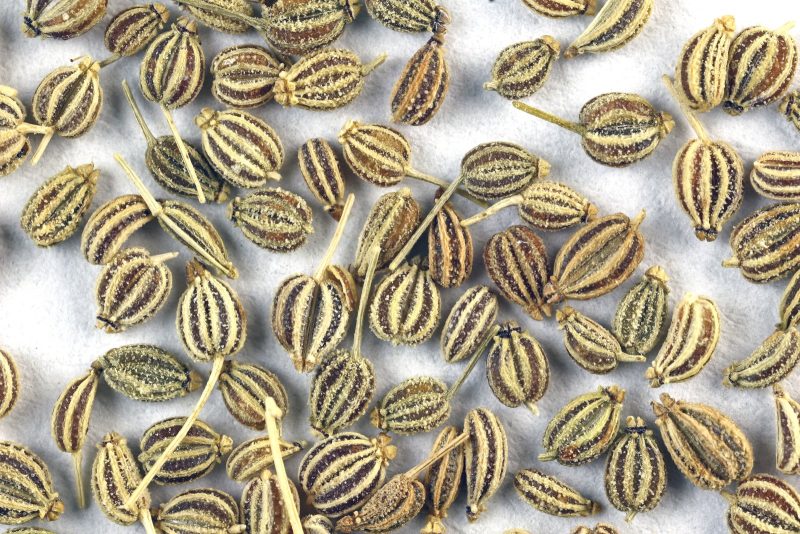
Most Sri Lankan spice boxes hold a small packet of asamodagam: tiny, ridged, greyish-brown seeds with a sharp, thyme-like smell. A pinch is chewed after a heavy rice-and-curry lunch or boiled for a bloated stomach, and many homes reach for asamodagam spirit or omum water when a baby cries with wind.
Botanical and Cultural Background
Asamodagam (Trachyspermum ammi, older name Carum copticum) is a small annual herb of the carrot family, Apiaceae, with feathery leaves and white umbrella-like flower heads. The “seeds” are really tiny dried fruits. It is grown mainly in India, Iran and Egypt; almost all asamodagam sold here is imported. Its aroma comes from an oil rich in thymol, the compound that gives thyme its smell. In Sanskrit it is yavani, in Tamil omam (hence “omum water”) and in Hindi ajwain. Ayurveda and Deshiya Chikitsa use it as a warming spice for wind, indigestion and colic.
Traditional Uses in Sri Lankan Medicine
- Gas and bloating — roasted seeds boiled in water and sipped warm after meals.
- Indigestion and poor appetite — a pinch chewed with a little salt, or added to the tempering of heavy dishes.
- Colds and blocked nose — crushed roasted seeds tied in a cloth and sniffed, or used in steam inhalation.
- Children’s colic — omum water or asamodagam spirit given in drops; read the cautions below.
What the Research Shows
There are no trials of asamodagam water or spirit for colic in babies; that use rests on tradition alone.
In a 2019 double-blind trial in Iran, 106 adults with functional bloating took capsules of asamodagam, ginger and black pepper (500 mg three times a day for two weeks), dimethicone (an anti-gas medicine) or a placebo. Bloating improved significantly more with the herbal capsules, and the benefit lasted eight weeks after stopping. With three spices combined, asamodagam’s own share is unknown, and the trial is unrepeated. A 2016 trial in 92 patients found a 10% asamodagam cream eased burning foot pain from nerve damage better than a placebo cream.
In rats, asamodagam raised stomach acid nearly four-fold, sped the passage of food and boosted digestive enzymes, which fits its traditional use but is untested in people. Antibacterial, antifungal and cholesterol-lowering effects in lab and animal studies are unproven in humans.
Evidence updated November 2026.
How Asamodagam Is Prepared
- Asamodagam water (adults) — dry-roast one teaspoon (about 5 g) of seeds, add two cups of water and boil down to one cup. Strain and sip warm after meals, up to twice a day.
- Seed chew — a quarter to half a teaspoon chewed with a pinch of salt after a heavy meal.
- Steam — a teaspoon of crushed seeds in a bowl of hot water; inhale for 5–10 minutes. Not for small children (scald risk).
- Older children — ask a doctor first; if they agree, a much weaker water, a few teaspoons at a time.
Safety and Precautions
As a cooking spice it is safe for most people. Medicinal amounts need care:
- Babies — under six months, only breast milk: no water, gripe water or spirit. Asamodagam spirit usually contains alcohol (check the label), which is unsafe for infants. Colic usually settles by three to four months. See a doctor at once if crying comes with fever, vomiting, refusing feeds, a hard swollen tummy or blood in the stool.
- Pregnancy — cooking amounts only. The seeds are a folk abortifacient and high doses harmed unborn rats.
- Heartburn — it may raise stomach acid and worsen gastritis or reflux.
- Concentrated oil — never swallow it or apply it undiluted.
- Blood thinners — on warfarin, aspirin or clopidogrel, avoid medicinal doses unless your doctor agrees.
- See a doctor if indigestion persists or comes with weight loss, vomiting or black stools.

Comments (0)
Leave a Comment