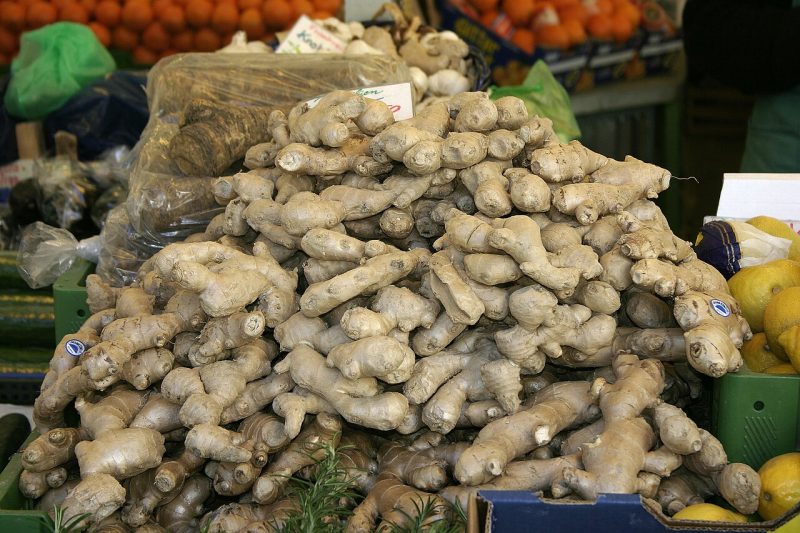
Inguru (Zingiber officinale) earns its Ayurvedic title vishwabhesaj — universal medicine — more honestly than most herbs earn their epithets. Ginger is one of the few traditional remedies with solid human trial evidence behind a specific, well-defined use, and Sri Lankans reach for it before anything else at the first sign of a cold.
Botanical and Cultural Background
Ginger is a herbaceous perennial of the Zingiberaceae family — the same family as turmeric and cardamom — grown for its thick, aromatic, branching rhizome. It has been cultivated so long that it is not known in the wild.
In Sri Lanka, ginger pounded with garlic forms the base of nearly every meat and fish curry, and inguru koththamalli — ginger and coriander tea — is the undisputed national remedy for a cold.
Phytochemistry
The pungency and much of the activity of fresh ginger comes from phenolic compounds called gingerols, chiefly 6-gingerol. When ginger is dried or cooked, gingerols dehydrate into shogaols, which are more pungent still and are more active in several antioxidant and anti-inflammatory assays. This is why dried and fresh ginger behave differently, and why traditional practice distinguishes them.
What the Research Shows
Nausea and vomiting — the strong evidence
Ginger is arguably the best-evidenced botanical remedy there is for nausea. Randomised trials and systematic reviews support its use for motion sickness, post-operative nausea, and nausea and vomiting of pregnancy, where it is one of the few remedies with enough evidence to appear in mainstream clinical guidance. It appears to act on the gut directly rather than through the brain, promoting gastric emptying. Evidence for chemotherapy-induced nausea is more mixed.
Osteoarthritis — moderate evidence
Gingerols and shogaols inhibit inflammatory prostaglandin synthesis, broadly as anti-inflammatory drugs do. Trials of ginger extract in knee osteoarthritis, including Altman's, have reported modest reductions in pain — real, but smaller than the enthusiasm around it suggests, and not a replacement for arthritis care.
Colds and respiratory symptoms — traditional
The warming, sweat-promoting effect that underpins inguru koththamalli is traditional rather than clinically demonstrated. It soothes; it does not shorten a viral illness.
How Inguru Is Prepared
Inguru koththamalli: Crushed fresh ginger boiled with lightly roasted coriander seed, taken warm.
Ginger tea: Slices simmered in water, with honey or jaggery.
In cooking: Pounded with garlic as a curry base.
Safety and Precautions
Ginger as a food and everyday drink is safe for almost everyone, and this is genuinely one of the gentler entries on this site. The cautions apply to concentrated or high medicinal intake.
Ginger affects platelet function, so it can add to the effect of blood thinners. If you take warfarin, aspirin, clopidogrel or another anticoagulant, tell your doctor before taking ginger in medicinal quantities, and stop high-dose use at least a week before surgery or dental extraction.
In pregnancy, ginger is one of the better options for morning sickness — but keep to modest culinary and tea quantities rather than concentrated supplements, and mention it to your midwife or doctor, particularly in the first trimester or if you have a history of bleeding or miscarriage.
Ginger may lower blood sugar and blood pressure, which matters if you take medication for either. It can worsen heartburn in some people. If you have gallstones, seek advice first, as ginger stimulates bile flow. Large amounts may irritate the stomach — take it with food if this happens.



Comments (0)
Leave a Comment