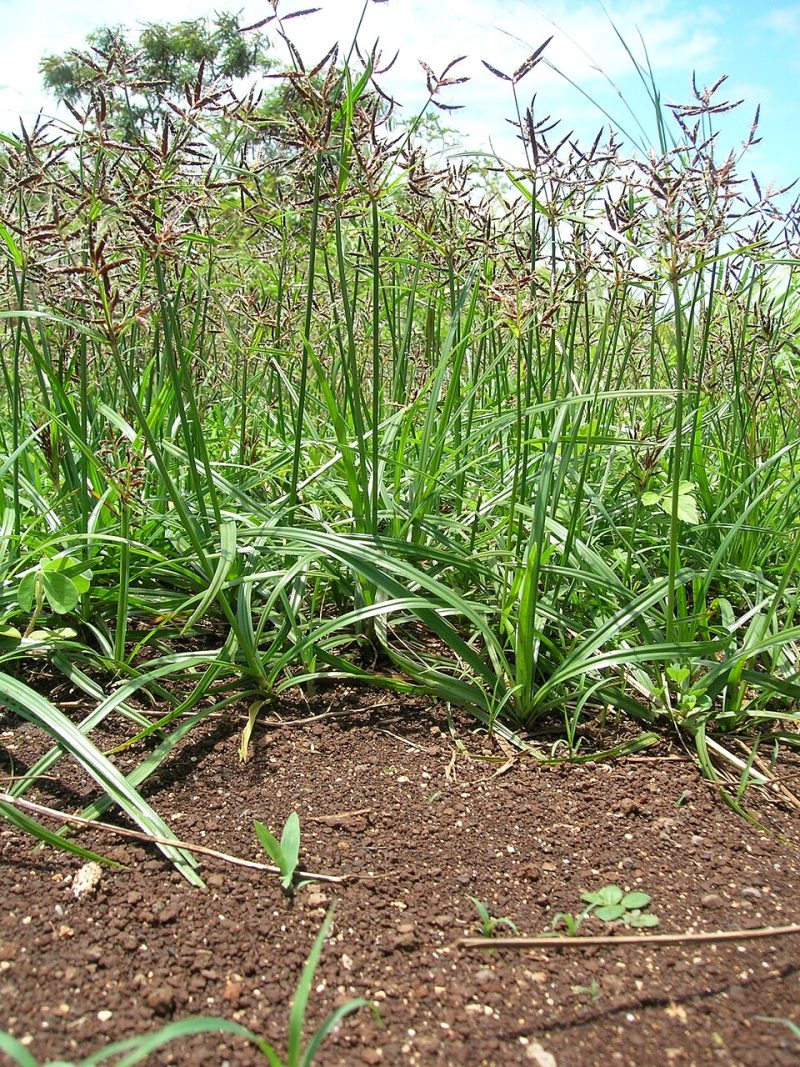
Kalanduru (Cyperus rotundus) has a genuine claim to being the most troublesome weed on earth — it is routinely described that way in the agricultural literature, having defeated farmers on every inhabited continent through an underground network of tubers that regenerates from almost nothing. Ayurveda calls those same tubers musta and considers them a treasure.
Botanical and Cultural Background
Kalanduru is a perennial sedge of the Cyperaceae family — not a grass, though it looks like one — with triangular stems and shiny dark leaves, spreading by rhizomes that terminate in small, hard, dark, intensely aromatic tubers.
Those tubers are the medicine: bitter, astringent and fragrant, ranked in Ayurveda among the finest digestive and fever herbs. It is one of the very few plants that farmers curse and physicians prize in equal measure.
Traditional Uses in Sri Lankan Medicine
Digestion
Its principal use — tuber decoction for indigestion, cramping, poor appetite and loose stools.
Fevers
A classical jwara herb, particularly for fever with digestive upset.
Menstrual complaints
Used traditionally as an emmenagogue and for period pain.
Skin and itching
Paste applied externally.
What the Research Shows
Cyperus rotundus is well studied. Its tuber essential oil contains sesquiterpenes — cyperene, cyperotundone, α-cyperone — and research reports anti-inflammatory, antispasmodic, antidiarrhoeal, antipyretic and antioxidant activity in laboratory and animal models. The antispasmodic findings give the digestive tradition a plausible basis.
Human clinical evidence is limited. Kalanduru is a well-characterised aromatic bitter with sensible traditional uses — not a treatment for any specific disease.
The malaria claim should be dropped: malaria needs a blood test and antimalarial drugs, and Sri Lanka is certified malaria-free, so a malarial fever here is an imported case needing prompt testing.
How Kalanduru Is Prepared
Decoction: Cleaned dried tubers boiled and strained.
Powder: Dried tubers ground, taken in small amounts with warm water.
Paste: Ground tuber applied externally.
Scrub the tubers well — they come out of the ground and hold soil in their fibres.
Safety and Precautions
Dysentery is not a job for an astringent. Kalanduru is traditionally given to stop diarrhoea and dysentery, but diarrhoea with blood or mucus means Shigella or amoebiasis, needing diagnosis and specific treatment. And what kills in acute diarrhoea — particularly in children — is dehydration: oral rehydration solution comes first, always. Take a child to a doctor for blood in the stool, persistent vomiting, no urine for many hours, sunken eyes or drowsiness.
Avoid it in pregnancy. Kalanduru is a traditional emmenagogue with uterine-stimulating reputation, and medicinal quantities are not advisable without professional supervision.
Absent or irregular periods deserve investigation rather than herbal correction — the causes range from pregnancy to thyroid disease to polycystic ovary syndrome, and they need different treatment. Severe period pain likewise has causes worth finding, including endometriosis, which is frequently dismissed for years.
A fever lasting beyond two days needs assessment — in Sri Lanka, dengue must be considered. Avoid medicinal quantities while breastfeeding without advice.

Comments (0)
Leave a Comment