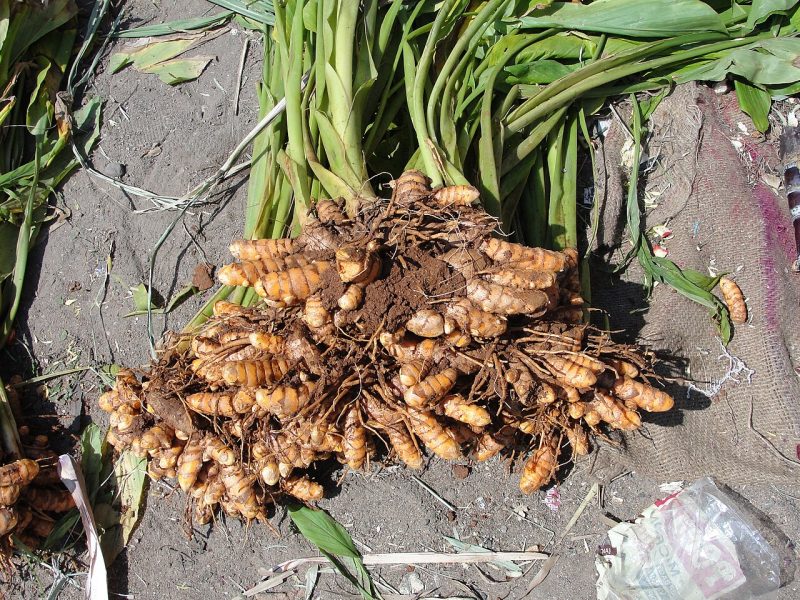
Kaha (Curcuma longa) is the most researched medicinal plant in the world and the most oversold. It is also a spice that has, in recent years, been found adulterated with lead — and taken as a concentrated supplement, has put people in liver clinics. The turmeric in your curry and the turmeric in a capsule are not the same proposition, and the difference is the most useful thing this page can tell you.
Botanical and Cultural Background
Turmeric is a rhizomatous perennial of the Zingiberaceae family — ginger's relative — grown for its brilliant orange rhizome. It has been cultivated in South Asia for millennia, and in Sri Lanka it is inseparable from both the kitchen and ritual life.
Phytochemistry
Turmeric's activity is concentrated in the curcuminoids, chiefly curcumin, which gives the rhizome its colour. Curcumin has notoriously poor bioavailability — it is poorly absorbed, rapidly metabolised and quickly cleared, which is the central difficulty in all research on it.
Sri Lankan cooking has solved this by accident and long practice: turmeric is used with black pepper, whose piperine substantially increases curcumin absorption, and with coconut milk, whose fat carries the fat-soluble curcuminoids. The traditional combination is pharmacologically sensible.
What the Research Shows
Curcumin inhibits inflammatory pathways including COX-2 and NF-κB in laboratory models, has antioxidant activity, and has been studied in an enormous range of conditions — arthritis, metabolic disease, depression, cancer. Trials in knee osteoarthritis are among the more encouraging, with several reporting reduced pain.
The honest summary, though, is more restrained than turmeric's reputation. Despite thousands of papers, curcumin has produced remarkably few definitive clinical results, and its chemistry — it interferes with many laboratory assays and shows activity against almost everything tested — has made some researchers sceptical that it is the wonder molecule the literature suggests. The claim that it matches anti-inflammatory drugs comes from small trials and should not be leaned on.
Two safety findings matter far more than any benefit claim.
First, concentrated curcumin supplements have caused liver injury. An outbreak in Italy involved around thirty cases of hepatitis linked to curcumin products, many of them piperine-enhanced formulations — the same piperine that boosts absorption also boosts exposure. Cases have been reported elsewhere, and the NIH LiverTox database carries an entry. Turmeric as a spice is not implicated; high-dose supplements are.
Second, turmeric has been adulterated with lead chromate — a bright yellow industrial pigment added to improve colour. This is documented, has been linked to raised blood lead levels in South Asia, and has triggered product recalls internationally. Lead is a neurotoxin with no safe level, and it is particularly harmful to children's developing brains.
How Kaha Is Used
In cooking: Added to nearly every Sri Lankan curry, with pepper and coconut milk — the combination that makes it absorbable.
Golden milk: A pinch simmered in milk with a grind of pepper.
On the skin: A paste applied traditionally to wounds and blemishes; it stains vividly.
Safety and Precautions
Buy turmeric you can trust. Given lead chromate adulteration, source from a reputable supplier — and buying whole rhizomes and grinding them yourself sidesteps the problem entirely, which is worth doing if you have children in the house. Suspiciously vivid, uniform colour in cheap powder is not reassurance.
Be cautious with supplements, not with curry. If you take a high-dose curcumin supplement — especially a piperine-enhanced one — know that liver injury has been reported. Stop it and see a doctor if you develop yellowing of the eyes or skin, dark urine, itching, nausea or unusual fatigue. Do not take it if you have liver disease.
Turmeric may increase bleeding risk, so tell your doctor if you take warfarin or another anticoagulant, and stop medicinal doses two weeks before surgery. It stimulates bile flow — avoid medicinal quantities if you have gallstones or bile duct obstruction. It is high in oxalate, so people prone to kidney stones should not take large supplement doses. It may lower blood sugar, relevant if you take diabetes medication, and piperine-containing combinations can raise levels of other drugs. Culinary amounts in pregnancy are fine; supplements are not advised.



Comments (0)
Leave a Comment