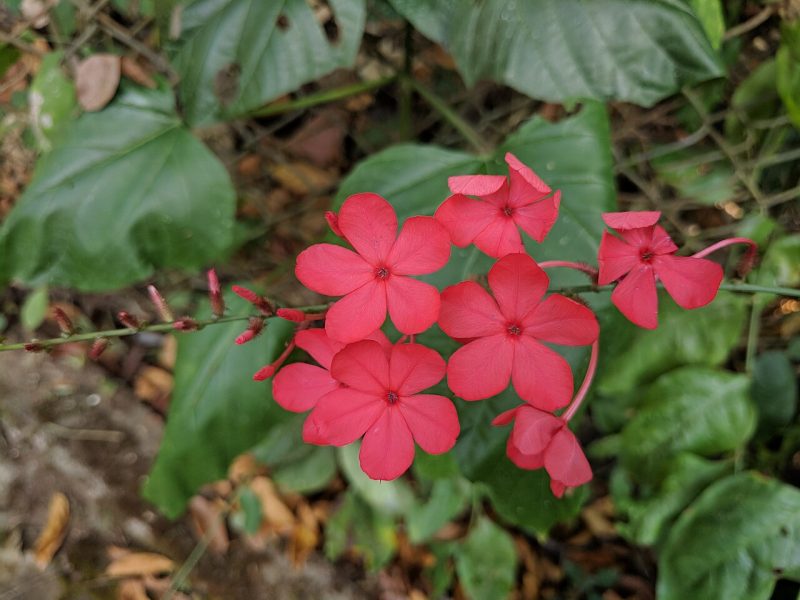
Rathnithul (Plumbago indica) is a handsome shrub with scarlet flower spikes, and beneath it a root that will raise blisters on skin. Ayurveda calls it chitraka and rates it among the most heating and digestion-kindling herbs it has. It is also one of the plants used in Sri Lanka to end pregnancies, sometimes at the cost of the woman's life.
Botanical and Cultural Background
Rathnithul is a sprawling evergreen shrub of the Plumbaginaceae family, recognisable by long spikes of vivid scarlet-red flowers. It is grown in medicinal gardens across the island. The medicinal part is the root, and it is never used raw internally.
Its Sanskrit name chitraka — with the red-flowered form called rakta chitraka — reflects its classification as intensely ushna (hot) and deepana (digestive-fire kindling).
Traditional Uses in Sri Lankan Medicine
Internal uses below apply only to purified root prescribed by a qualified practitioner.
Digestion
Its premier use — purified root in tiny doses for sluggish digestion, poor appetite and bloating.
Joint pain
Used internally in classical formulations for amavata, and externally as a carefully buffered paste.
Haemorrhoids
Traditionally used for non-bleeding piles, internally and externally.
Skin conditions
The root's plumbagin has antimicrobial activity; pastes were historically applied to fungal infections and chronic skin disease.
What the Research Shows
The root's principal compound is plumbagin, a naphthoquinone that has been studied extensively. Research reports antimicrobial, anti-inflammatory and anticancer activity in laboratory models, and plumbagin is of genuine interest as a research compound.
Plumbagin is also a vesicant — it blisters skin on contact — and studies have reported genotoxic and mutagenic effects, along with reproductive toxicity in animals. It is not a benign molecule, and its laboratory anticancer activity says nothing about treating cancer in a person.
Two traditional claims should be set aside. Rathnithul is not a weight-loss agent — its inclusion in "fat-scraping" formulations reflects Ayurvedic theory about heat and metabolism, not demonstrated fat loss, and heating a body is not the same as reducing it. And it does not cure haemorrhoids; piles have straightforward modern management, and applying a blistering agent to inflamed anal tissue is a poor idea.
Preparation (Purified Only)
Shodhana: Raw roots are cut and soaked in lime water or buttermilk for several days, the liquid changed daily, to reduce the blistering principle.
Internally: Purified root powder in extremely small doses with buttermilk or warm water.
Externally: Root ground with milk or oil to buffer its action, applied cautiously.
Safety and Precautions
Rathnithul must never be used in pregnancy, and this warning carries real weight in Sri Lanka. Plumbago root is a known folk abortifacient here and in India — including insertion of the root to induce abortion — and it causes severe local tissue destruction, bleeding, infection and sepsis. Women have died. If you need to end a pregnancy, it is a medical matter with safe options; this root is not one of them, and it is one of the most dangerous choices available.
The raw root burns. Plumbagin is a vesicant: direct contact causes redness, blistering and chemical burns. Raw internal use causes severe gastroenteritis.
Internal use is strictly for purified root prescribed by a registered Ayurvedic physician at minute doses. Avoid it entirely if you are pregnant or breastfeeding, have a bleeding disorder, or have inflammatory bowel disease or gastric ulcers. Given the reported genotoxicity, prolonged use is inadvisable. Keep it away from children, and wash your hands after handling the fresh root.

Comments (0)
Leave a Comment