Fruits & Seeds

Thambili (Cocos nucifera var. aurantiaca): Sri Lanka's Orange King Coconut

(Cocos nucifera var. aurantiaca) • Last updated Nov 01, 2026
Thambili (Cocos nucifera var. aurantiaca): Sri Lanka's Orange King Coconut
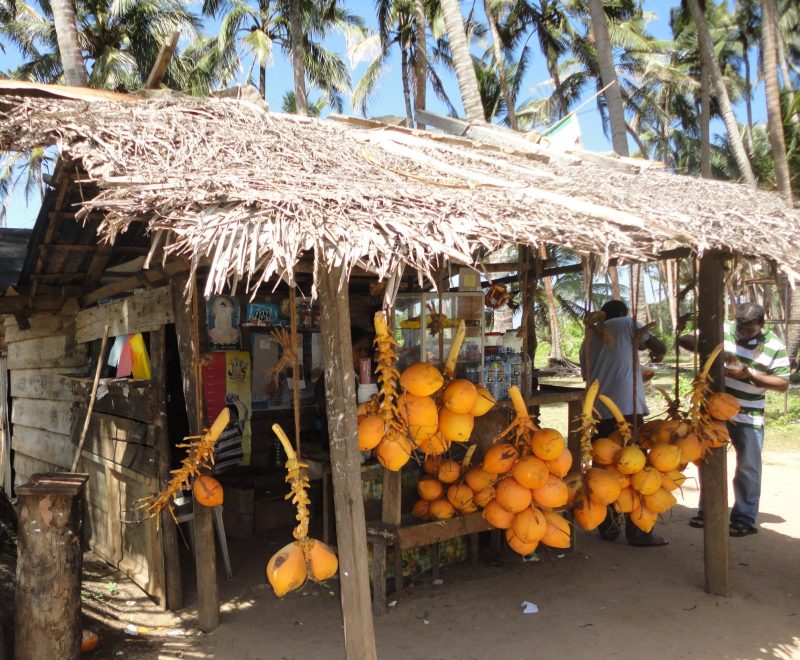
Image Credit: Singhalawap, CC BY-SA 3.0, via Wikimedia Commons

Quick Facts

Sinhala Name තැඹිලි (Thambili)
English Name King coconut
Scientific Name Cocos nucifera var. aurantiaca
Plant Family Arecaceae
Parts Used Water of the young nut (and soft kernel)
Common Uses Rehydration in heat, extra fluid in mild diarrhoea, cooling drink in fever, burning urination (traditional)

On any hot afternoon along a Sri Lankan road you will see bunches of bright orange thambili hanging at a roadside stall, and the vendor slicing off the top with a few strokes of the knife. King coconut water is the country's favourite cooling drink — given to the feverish, the sun-struck and anyone with an upset stomach — and a coconut Sri Lankans think of as their own.

Botanical and Cultural Background

Cocos nucifera var. aurantiaca is an orange-fruited form of the coconut palm (family Arecaceae). Its nuts are smaller than ordinary coconuts and are grown for drinking rather than for oil. A Sri Lankan study of the nawasi thambili type found that as the nut matures from six to eight months its water grows sweeter while its mineral content falls; calcium and magnesium were prominent. In Deshiya Chikitsa thambili is regarded as cooling and is a usual drink in fevers and the hot season.

Traditional Uses in Sri Lankan Medicine

  • Heat and thirst — a fresh nut on hot days or after working in the sun.
  • Diarrhoea and vomiting — sipped to replace lost fluid, sometimes with a pinch of salt.
  • Burning urination — drunk for the burning feeling put down to body heat.
  • Fevers and chickenpox — given as a light, cooling drink to the sick.

What the Research Shows

Diarrhoea: Coconut water provides water, natural sugar and potassium, but analyses during a Pacific cholera outbreak found it relatively low in sodium, chloride and bicarbonate — the salts lost most in diarrhoea. A study in children with mild gastroenteritis concluded that young coconut water, with early feeding, can be used at home early in mild diarrhoea, but warned that its electrolytes are unbalanced and that it should not be used in severe diarrhoea, dehydration or kidney impairment. It is not a substitute for oral rehydration salts.

Heat and exercise: In two small crossover trials (8 and 12 young men dehydrated by exercise), coconut water rehydrated about as well as plain water or a sports drink. One found it caused less nausea; the other reported more bloating and stomach upset.

Potassium: Sri Lankan doctors described a 78-year-old man with diabetes and kidney failure, taking losartan and spironolactone, who drank excessive king coconut water for about a week. His potassium rose to 7.0 mmol/L, causing paralysis and dangerous heart rhythms.

Evidence updated November 2026.

How Thambili Is Prepared

  • As a drink — choose a heavy nut with a bright husk, cut the top open and drink the water soon after opening; scoop out the soft kernel with a piece of husk. One nut a day is a common amount for a healthy adult.
  • For mild loose motions — adults can sip thambili through the day as well as, not instead of, oral rehydration salts such as Jeewani.
  • With salt — some add a pinch of salt for diarrhoea; this still does not make it a proper rehydration solution.

Safety and Precautions

For most healthy people, including pregnant and breastfeeding women and children, a nut of thambili is a safe, pleasant drink.

  • Kidney and heart disease: if you have chronic kidney disease (including CKDu) or heart failure, or take medicines that raise potassium such as enalapril, losartan or spironolactone, ask your doctor before drinking thambili regularly. Muscle weakness, palpitations or fainting need emergency care.
  • Diabetes: it contains natural sugar; count it like fruit juice and never let it replace your treatment.
  • Diarrhoea: use ORS, and see a doctor for infants, blood in the stool, repeated vomiting or signs of dehydration.
  • Dengue: thambili is often given as an oral fluid, but follow your doctor's advice on how much to drink, and go to hospital at once with warning signs such as abdominal pain, persistent vomiting, bleeding, drowsiness or little urine.

Scientific References

Kuberski T, Roberts A, Linehan B, Bryden RN, Teburae M (1979). Coconut water as a rehydration fluid. New Zealand Medical Journal, 90(641), 98-100. PMID:290921
Adams W, Bratt DE (1992). Young coconut water for home rehydration in children with mild gastroenteritis. Tropical and Geographical Medicine, 44(1-2), 149-153. PMID:1496708
Saat M, Singh R, Sirisinghe RG, Nawawi M (2002). Rehydration after exercise with fresh young coconut water, carbohydrate-electrolyte beverage and plain water. Journal of Physiological Anthropology and Applied Human Science, 21(2), 93-104. doi:10.2114/jpa.21.93
Kalman DS, Feldman S, Krieger DR, Bloomer RJ (2012). Comparison of coconut water and a carbohydrate-electrolyte sport drink on measures of hydration and physical performance in exercise-trained men. Journal of the International Society of Sports Nutrition, 9(1), 1. doi:10.1186/1550-2783-9-1
Hemachandra KHDT, Dayasiri MBKC, Kannangara T (2018). Acute ascending flaccid paralysis secondary to multiple trigger factor induced hyperkalemia. Case Reports in Neurological Medicine, 2018, 6360381. doi:10.1155/2018/6360381
Jayasinghe MD, Gunasekara MMNP, Perera MGDS, Karunarathna KDSM, Chandrasiri GU, Hewajulige IGN (2023). Study on compositional changes of king coconut (Cocos nucifera var. aurantiaca) water and kernel during maturation and evaluation of optimum quality characteristics targeting commercial applications. Journal of the National Science Foundation of Sri Lanka, 51(2), 273-285. doi:10.4038/jnsfsr.v51i2.11127

Frequently Asked Questions

Is thambili better than Jeewani (ORS) for diarrhoea?

No. Thambili has far less sodium than oral rehydration salts. It can be an extra drink in mild diarrhoea, but ORS is what prevents dehydration. See a doctor for a child with signs of dehydration, blood in the stool or repeated vomiting.

Can people with kidney disease drink thambili?

Only on your doctor's advice. Thambili contains a lot of potassium, and Sri Lankan doctors have reported dangerously high potassium in a kidney patient who drank too much of it. This matters even more if you take losartan, enalapril or spironolactone.

Can diabetics drink thambili every day?

It contains natural sugar, so treat it like fruit juice: an occasional nut in place of a sweet drink, counted in your daily diet, with your sugar checked. Keep taking your diabetes medicine.

Medical Disclaimer The information on this page is for educational purposes only and is not a substitute for professional medical advice, diagnosis, or treatment. Always consult a qualified physician or Ayurvedic practitioner before using any herbal remedy, especially if you are pregnant, nursing, taking medication, or have a medical condition. Read our full disclaimer
Spotted a mistake or a safety concern? ✎ Suggest a correction ⚑ Report an issue
Nishnath Thaweesha

Edited by Nishnath Thaweesha

I am deeply connected to nature, animals, and wildlife. Exploring the healing power of the natural world and traditional herbal wisdom is my lifelong passion. As a Human-in-the-Loop (HITL) Editor, I rigorously fact-check, curate, and verify all botanical content against scientific journals to ensure the highest standards of accuracy and trust.


Comments (0)

Leave a Comment