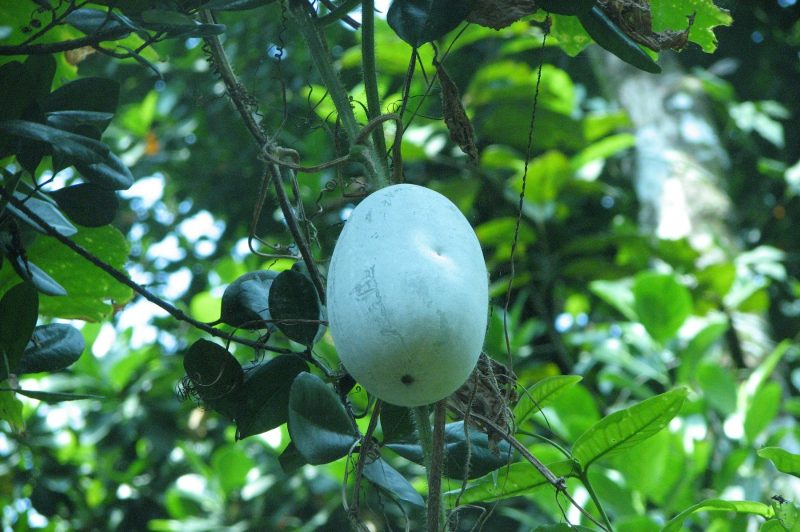
Alu puhul (Benincasa hispida) is the big, pale gourd dusted with chalky white bloom that is piled up at the pola and hung, painted with a fierce face, in front of half-built houses to ward off es waha. Its mild, watery flesh becomes puhul juice, a light curry or sweet, glassy puhul dosi. It is prized as a cooling food and, in Ayurveda, as a tonic for the mind.
Botanical and Cultural Background
Ash gourd, also called wax gourd or winter melon, is an annual vine of the gourd family with large, hairy leaves and yellow flowers. Ripening fruits grow the powdery, ash-like wax that gives alu puhul its name and lets a whole fruit keep for months. It grows in home gardens and chenas across the island. In Sanskrit it is kushmanda, one of the medhya herbs said to support the intellect, used in kushmanda ghrita (ash gourd ghee) and the sweet kushmanda rasayana.
Traditional Uses in Sri Lankan Medicine
- Body heat and burning urine — a glass of fresh juice in the morning in hot weather or for burning, scanty urination.
- Acidity and stomach burning — juice or lightly cooked flesh for gastritis and ulcer-type pain.
- Mind and nerves — for poor memory and mental unrest, and in Ayurvedic treatment of epilepsy; kushmanda ghrita for low mood and anxiety.
- Cough and bleeding — kushmanda rasayana for long-standing cough, weakness and nosebleeds.
What the Research Shows
Most research is in animals and test tubes. A 2021 review summarises rat and mouse studies in which fruit extracts or juice showed anti-ulcer, anti-inflammatory, anticonvulsant, antidepressant-like and memory effects. The reviewers say human trials are still needed, and a 2025 review notes that kushmanda has been studied far less than other Ayurvedic brain herbs.
Human studies are few and small. In India, 35 patients with depression took 20 ml of kushmanda ghrita daily for a month and their depression, anxiety and memory scores improved, but there was no comparison group. A pilot in 20 people with indigestion reported fewer symptoms after a month of daily juice, again without controls. A 2024 Malaysian trial gave 50 adults with type 2 diabetes a drink with 2.5 g of ash gourd extract or a placebo for 12 weeks: diastolic blood pressure fell, but the fall in fasting blood sugar was small and not clearly better than placebo. Benefits for memory, depression, ulcers or diabetes remain unproven.
Evidence updated November 2026.
How Alu Puhul Is Prepared
Puhul juice: peel a slice of ripe ash gourd, remove the seeds and spongy core, and blend one cup of flesh with half a cup of water. Drink one fresh glass (150-200 ml) on an empty stomach or between meals, with a pinch of salt or squeeze of lime but no sugar.
Puhul dosi: cubes are pricked, soaked in hunu (lime) water to firm them, boiled, then simmered in thick syrup until glassy. It is a festive sweet, not a medicine.
Kushmanda ghrita and rasayana are made by Ayurvedic physicians; take them only on their advice.
Safety and Precautions
- Food use — as a vegetable or a glass of juice, ash gourd is safe for most people, including children and pregnant women. Concentrated extracts lack long-term human safety data; avoid them in pregnancy and breastfeeding.
- Bitter taste — ash gourd should taste bland. Throw away bitter flesh or juice; unusually bitter gourds can contain toxins that cause severe vomiting and diarrhoea.
- Diabetes and blood pressure — puhul dosi is mostly sugar. Never replace prescribed medicine with puhul juice; check your readings and tell your doctor if you drink it daily.
- Kidney disease — if your fluids are restricted, count the juice in your daily allowance.
- Mind and fits — depression, memory loss and epilepsy need a doctor; never stop prescribed medicines.


Comments (0)
Leave a Comment