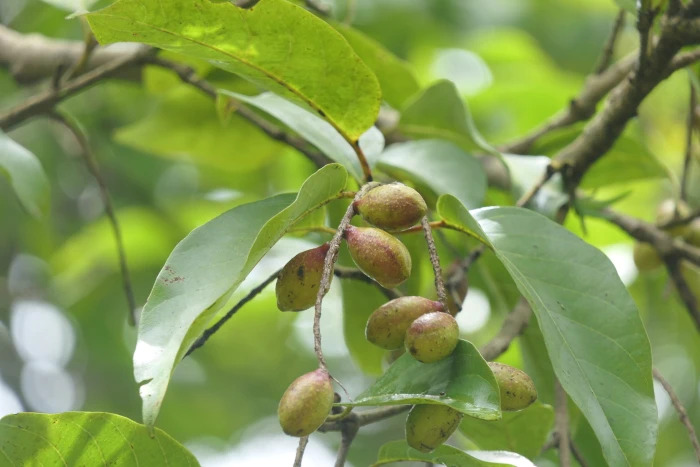
Aralu (Terminalia chebula) carries an unusual reputation: Tibetan medical texts depict it in the hand of the Medicine Buddha, and Ayurvedic tradition calls it haritaki, ranking it among the most valuable of all plant medicines. In Sri Lanka it is best known as one third of Triphala.
Botanical and Cultural Background
Aralu is a large deciduous tree of the Combretaceae family, reaching upwards of twenty metres, with a broad crown and small yellowish flowers. The fruit is a hard, ribbed, oval drupe that is dried for medicinal use, shrinking to a wrinkled brown husk around a single stone.
Its most famous role is in Triphala — literally "three fruits" — the combination of aralu (Terminalia chebula), bulu (Terminalia bellirica) and nelli (Phyllanthus emblica). This trio is among the most widely used formulations in the entire Ayurvedic system, valued as a gentle regulator of digestion rather than a treatment for a specific disease.
Traditional Uses in Sri Lankan Medicine
Digestion and constipation
Aralu's principal use. It is regarded as a laxative that also tones the digestive tract, and traditional texts describe it as regulating bowel function rather than simply purging.
As part of Triphala
Taken in the Triphala combination, aralu contributes to a preparation used for digestive regularity, general wellbeing and eye health.
Throat and mouth
Decoctions are used as a gargle for sore throat and inflamed gums, reflecting the fruit's strong astringency.
What the Research Shows
Terminalia chebula is one of the more thoroughly investigated Ayurvedic plants. Research has identified a high tannin content — including chebulagic and chebulinic acids — along with ellagic acid and gallic acid, and has examined antioxidant, antimicrobial, anti-inflammatory and metabolic effects in laboratory and animal studies.
There is some human research on Triphala as a formulation, particularly around digestive function and oral health, but the trials are generally small and vary in quality. Aralu's traditional standing runs well ahead of the clinical evidence base, and the two should not be conflated.
How Aralu Is Prepared
Powder: The dried fruit (minus the stone) is ground and taken in small quantities, often with warm water at night.
Triphala: Equal parts aralu, bulu and nelli powder, taken with warm water.
Gargle: A decoction of the dried fruit, cooled and used as a mouth rinse.
Safety and Precautions
Aralu is a laxative, and that shapes most of its cautions. It is not intended for indefinite daily use as a purgative: prolonged laxative use can lead to dependence and disturb fluid and electrolyte balance. Persistent constipation deserves investigation rather than long-term self-treatment.
It should be avoided in pregnancy, and during breastfeeding without professional advice. Anyone who is dehydrated, severely debilitated, or has diarrhoea should not take it. Because aralu is rich in tannins, it may reduce the absorption of medicines taken at the same time — separate doses by at least two hours. Its effects on blood sugar mean people on diabetes medication should use it with awareness, and it is best stopped before scheduled surgery.



Comments (0)
Leave a Comment