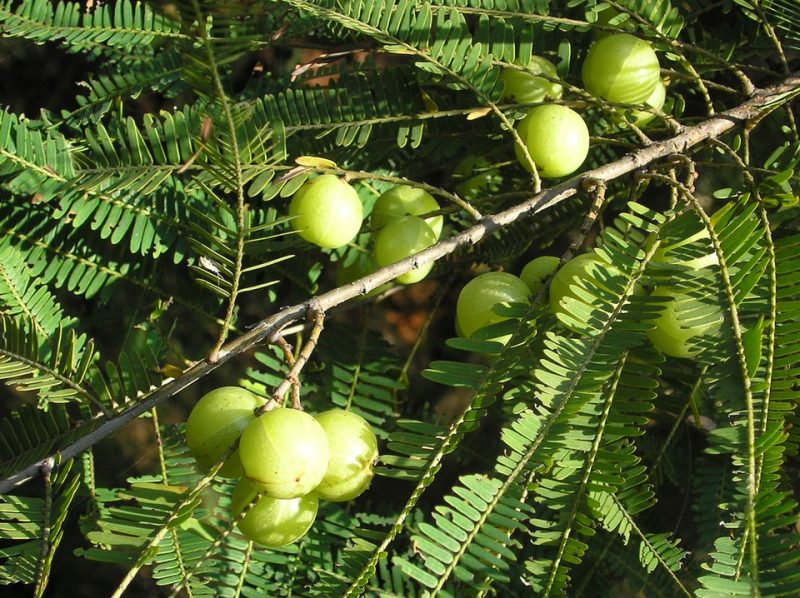
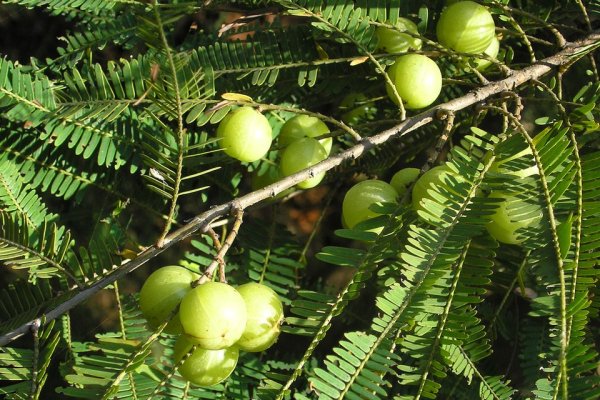
Nelli (Phyllanthus emblica) is the fruit that plays a trick on you: bite it and it is astringent and shockingly sour, then drink water and your mouth fills with sweetness. Ayurveda calls it a supreme rasayana, it is the third fruit of Triphala, and it is the subject of one of the more persistent pieces of nutritional misinformation in South Asia.
Botanical and Cultural Background
Nelli is a small to medium deciduous tree of the Phyllanthaceae family, with feathery rows of small leaves and pale greenish-yellow fruit that is round, ribbed and translucent. It grows across the dry and intermediate zones and in home gardens.
With aralu and bulu it forms Triphala, and it is said to pacify all three doshas, particularly pitta. It is eaten fresh with salt, dried, pickled, drunk as a cordial with iramusu, and boiled into hair oil.
What the Research Shows
The vitamin C claim needs care. You will read that nelli has twenty or thirty times the vitamin C of an orange. It does not. Fresh amla is genuinely rich in vitamin C — very roughly ten times an orange by weight, which is impressive enough — but the higher figures come partly from an assay artefact: amla is loaded with hydrolysable tannins, and these interfere with the standard titration used to measure ascorbic acid, inflating the reading. Scartezzini and colleagues examined precisely this. The related and more interesting point is that amla's antioxidant activity comes substantially from those tannins rather than from vitamin C alone — which is also why it behaves as a more stable antioxidant than the vitamin C figure alone would predict.
Research on Phyllanthus emblica reports antioxidant, anti-inflammatory, lipid-lowering and gastroprotective activity, and small human studies — such as Antony's pilot work on inflammation and lipids — exist. The evidence is preliminary but the fruit is nutritionally sound on its own terms.
Two claims should go. Nelli does not "reduce intraocular tension" or delay cataracts — raised eye pressure is glaucoma, which silently destroys vision and needs an ophthalmologist, and cataracts are treated with surgery. And it does not reverse greying hair, whatever the oil bottles say.
How Nelli Is Used
Fresh: One or two fruits eaten, followed by water — for the sweet aftertaste.
Nelli drink: Juice with water and bee honey, often with iramusu.
Triphala: Equal parts aralu, bulu and nelli in warm water.
Hair oil: Dried pieces simmered in coconut oil until dark, then strained.
Safety and Precautions
Nelli as food is safe and good, and there is no reason for most people to hesitate over it. The cautions concern concentrated supplements and medicinal quantities.
Nelli may increase bleeding risk — tell your doctor if you take warfarin or another anticoagulant, and stop medicinal doses two weeks before surgery or dental extraction. It may lower blood glucose, so watch for an additive effect if you take diabetes medication. Its high tannin content can reduce absorption of medicines taken at the same time; separate doses by about two hours. It is markedly cooling: people prone to colds or wheezing often take it with ginger or honey. Being acidic and high in fibre, large amounts may irritate an unhappy stomach or loosen the bowels.
If your vision is changing, see an eye doctor. Glaucoma is painless and permanent, and cataracts are fixed with a short operation — neither is a job for fruit.



Comments (0)
Leave a Comment