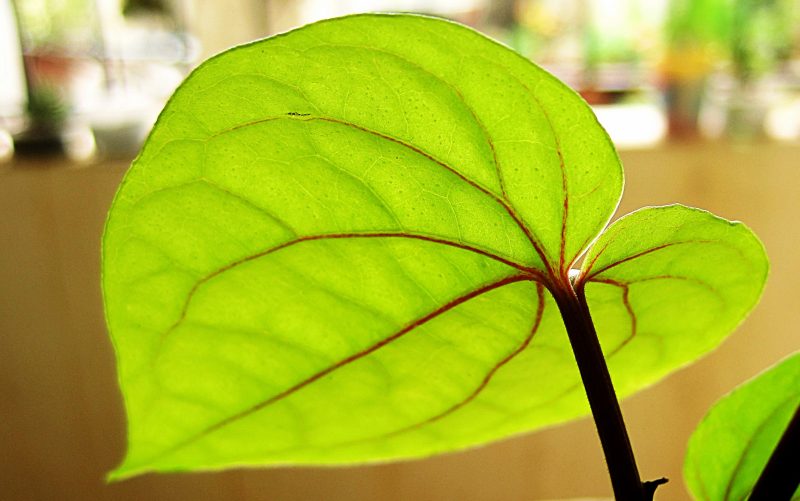
No plant is woven deeper into Sri Lankan life than bulath (Piper betle). A sheaf of forty betel leaves — the bulath hurulla — is how respect is formally offered: to parents at New Year, to teachers, to physicians, to in-laws at a wedding. And yet the same leaf carries one of public health's most important warnings. Understanding bulath means holding both truths at once: a genuinely antimicrobial medicinal leaf, and a chewing habit that — combined with areca nut and slaked lime — causes oral cancer.
Botanical and Cultural Background
Bulath is a glossy, heart-leaved climbing vine of the pepper family (Piperaceae), cultivated across Sri Lanka's wet lowlands on living or wooden supports. The leaf's peppery warmth comes from an essential oil rich in phenols — chiefly hydroxychavicol and eugenol, the latter shared with its relative the clove. Ceremonially, offering betel marks nearly every rite of passage; a visitor greeted with betel is a visitor honoured.
Traditional Uses in Sri Lankan Medicine
Traditional practice uses the leaf far more widely than the chewing habit suggests:
- Wounds and cuts — warmed leaves or fresh leaf juice applied as a dressing; the leaf's antiseptic oils are credited with preventing infection.
- Oral health — chewing a plain leaf after meals as a breath freshener and gum tonic.
- Digestion — a leaf taken after a heavy meal as a carminative, easing gas and heaviness.
- Coughs and congestion — leaf juice with bee honey for coughs; warmed leaves spread with oil applied to the chest of children with congestion.
What the Research Shows
The leaf itself has real pharmacology. Reviews describe consistent laboratory evidence that betel leaf extracts — and hydroxychavicol in particular — are strongly antimicrobial and antifungal, with additional antioxidant, anti-inflammatory and wound-healing activity in animal models (Kumar et al., 2010; Guha, 2006). This supports the traditional topical and oral-hygiene uses of the plain leaf.
The critical distinction is the betel quid. The International Agency for Research on Cancer classifies betel quid chewed with areca nut — with or without tobacco — as carcinogenic to humans (Group 1), responsible for a large share of South Asia's oral cancers (IARC, 2004). The evidence points to the areca nut and slaked lime, with tobacco multiplying the risk, as the principal culprits; habitual quid chewing also causes oral submucous fibrosis. In short: the leaf used medicinally is not the same exposure as the lifelong quid habit, and this website does not encourage betel quid chewing in any form.
How Bulath Is Used
For traditional first aid, a fresh leaf is washed, warmed briefly over a flame until supple, and pressed over a cleaned minor cut or boil, replaced twice daily. As a digestive, a single plain leaf — without areca, lime or tobacco — is chewed after a meal. For coughs, a teaspoon of fresh leaf juice is mixed with bee honey.
Safety and Precautions
The safety message is unambiguous. Habitual chewing of betel quid with areca nut and lime is a proven cause of oral cancer and precancerous conditions, and adding tobacco compounds the danger — no traditional benefit outweighs this. Occasional medicinal use of the plain leaf, topically or after meals, carries no comparable evidence of harm, though the essential oil in large quantities can irritate. If you have any persistent mouth ulcer, white patch or restricted mouth opening, see a doctor promptly.

Comments (0)
Leave a Comment