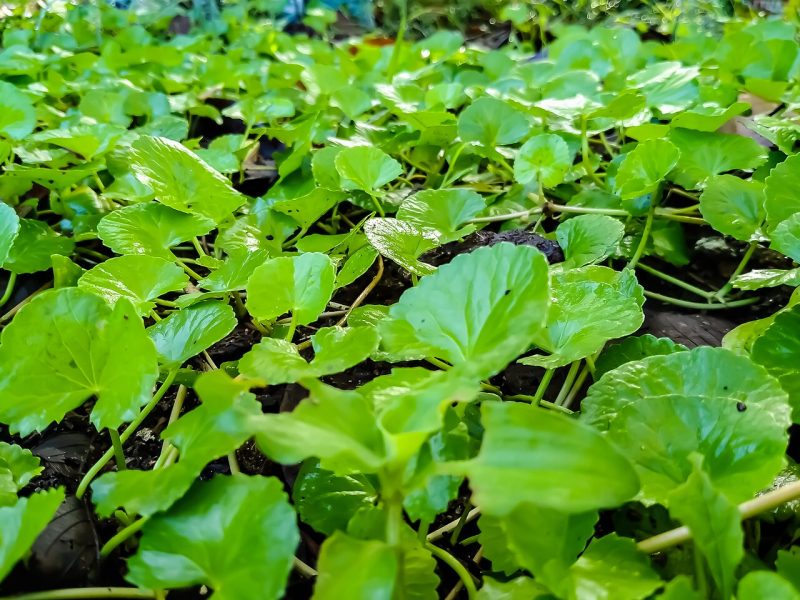
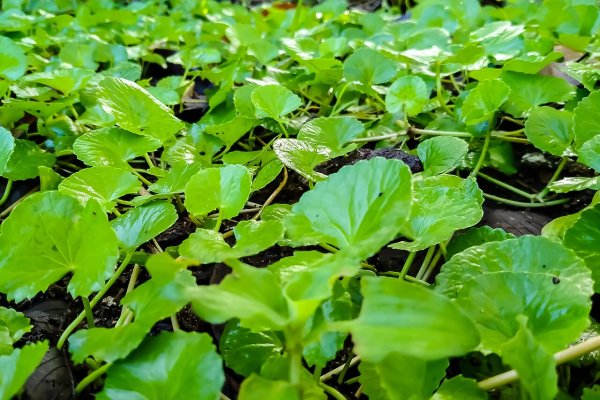
Gotukola (Centella asiatica) is unusual among medicinal plants in that most Sri Lankans consume it without thinking of it as medicine at all — chopped raw into sambol, or blended into kola kanda at breakfast. It is also one of a small number of traditional herbs with genuinely robust clinical evidence, though not for the use it is most famous for.
Botanical and Cultural Background
Gotukola is a small creeping perennial of the Apiaceae family — coriander's relative — with distinctive fan-shaped scalloped leaves on long stalks, spreading by runners through damp ground, paddy margins and lawns.
Ayurveda classes it as a medhya rasayana, a rejuvenator of the intellect, and it shares the name brahmi with lunuwila in some regions — a longstanding confusion worth knowing about.
Phytochemistry
Its activity comes from pentacyclic triterpenoid saponins collectively called centelloids: asiaticoside, madecassoside, asiatic acid and madecassic acid.
What the Research Shows
Venous insufficiency — the strong evidence
This is gotukola's best-supported use, and it is not the one people expect. Titrated extract of Centella asiatica has been studied in chronic venous insufficiency and varicose veins across several controlled trials, including Pointel's, with reductions in leg swelling and improved microcirculation. Its triterpenes stimulate collagen synthesis and improve vessel wall integrity. Gotukola extract is a recognised phytomedicine for this indication in parts of Europe.
Wound healing and scars
Well supported. Madecassoside promotes fibroblast proliferation and collagen deposition, and centella extracts appear in scar-management products internationally.
Cognition — the famous use, and the thinner evidence
Gotukola's reputation as brain food rests mostly on tradition and animal work showing dendrite growth. Human trials exist but are small and mixed, and the widely repeated claims about slowing Alzheimer's are extrapolated from laboratory research on amyloid, not demonstrated in people.
How Gotukola Is Eaten
Gotukola sambol: Leaves and stems finely chopped raw with grated coconut, red onion, green chilli, lime and salt.
Kola kanda: Leaf juice cooked with rice and coconut milk — the classic Sri Lankan herbal porridge.
Being eaten as food is the ordinary way to consume it, and the safest.
Safety and Precautions
Gotukola as food — sambol, kola kanda — is safe and worth eating. The cautions below concern concentrated extracts and supplements.
Centella supplements have been linked to liver injury. Case reports describe hepatitis associated with Centella asiatica preparations, resolving when stopped. This is uncommon and food quantities are not implicated, but if you take a supplement, stop it and see a doctor if you develop yellowing of the eyes or skin, dark urine or unusual fatigue. Do not take concentrated extracts if you have liver disease.
Wash it very thoroughly. Gotukola creeps along wet ground, often near drains and paddy, and is eaten raw in sambol — an unusual combination on this site. Wash it in several changes of water. Buy from a source you trust, since produce grown in contaminated water is a genuine concern.
Avoid medicinal quantities in pregnancy and breastfeeding without advice; sambol as food is fine. Gotukola may add to the effect of sedatives, and may raise blood sugar and cholesterol slightly at high doses. Stop supplements two weeks before surgery. As an Apiaceae member, it can cause reactions in people sensitive to that family, and contact dermatitis has been reported with topical use.



Comments (0)
Leave a Comment