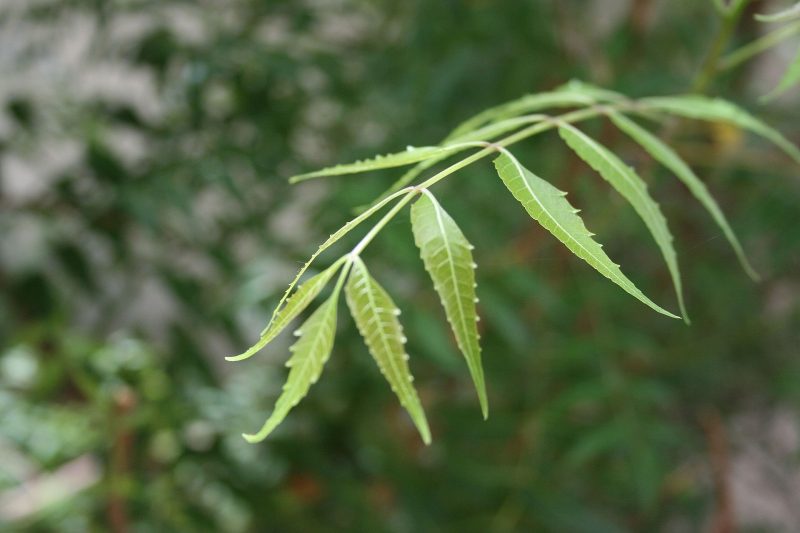
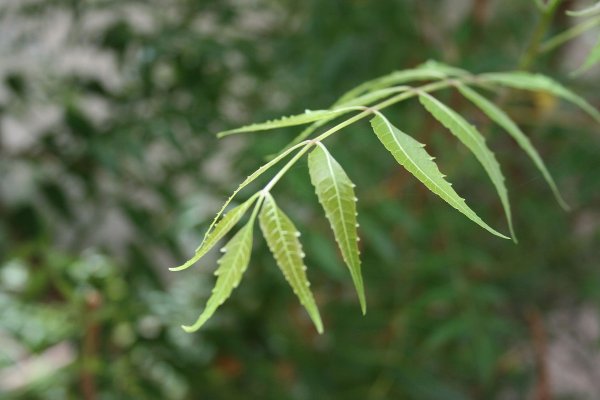
Neem (Azadirachta indica) is called the village pharmacy for good reason — a single tree supplies a toothbrush, an insecticide, a skin wash and a fever bitter. Kohomba is woven into Sri Lankan life more thoroughly than almost any other plant. It also has one genuine, serious danger that most articles about it never mention, and that danger falls on children.
Botanical and Cultural Background
Neem is a fast-growing evergreen of the Meliaceae family — the mahogany family — reaching fifteen to twenty metres, with compound serrated leaves and small white flowers. It tolerates drought and poor soil, which is why it lines roads and schoolyards across the dry zone.
Its presence in Sri Lankan culture runs deep: neem leaves are hung at doorways, used in kohomba kankariya ritual, burned against mosquitoes, and pressed into service the moment someone develops a rash.
Traditional Uses in Sri Lankan Medicine
Skin conditions
Its most familiar use. A paste of crushed leaves, or a neem leaf bath, is applied for acne, rashes, itching and minor wounds.
Oral hygiene
Neem twigs have served as toothbrushes for centuries, and the practice has a plausible basis in the plant's antibacterial compounds.
Fevers and "blood purification"
The intensely bitter leaf is taken as a tea or chewed, traditionally understood to cool the body and clear impurity from the blood.
As an insecticide
Neem is a genuinely effective agricultural insecticide, and this is one of its best-validated uses.
What the Research Shows
Neem is chemically rich — over a hundred biologically active compounds have been described, with azadirachtin, nimbidin and nimbin among the most studied. Research has demonstrated antibacterial, antifungal, antiviral, anti-inflammatory and insecticidal activity, largely in laboratory models. Azadirachtin's insecticidal action is well established and neem-based products are used in agriculture worldwide.
The evidence for neem's dental use is among the better human data: several small trials have compared neem mouthwash or neem chewing sticks with conventional oral hygiene and reported reductions in plaque and gingivitis.
For internal medicinal use in humans — fevers, blood purification, diabetes — the clinical evidence is thin, and neem's traditional standing far exceeds it.
How Neem Is Prepared
Leaf paste: Fresh leaves crushed with a little water, applied to the skin.
Neem bath: A handful of leaves added to warm bathwater.
Neem tea: A few leaves boiled briefly — extremely bitter, taken in small quantities.
Chewing stick: A fresh twig frayed at one end.
Safety and Precautions
Never give neem oil to a baby or young child. This is the most important sentence on this page. Neem oil is not a gentler version of the leaf — it is a concentrated product, and infant neem oil poisoning is a documented and recurring cause of serious illness and death across South Asia. It produces vomiting, drowsiness, seizures, metabolic acidosis and an encephalopathy resembling Reye's syndrome, and it can kill within hours. Even small amounts have caused this. The practice of giving neem oil to infants for colic, or applying it around the mouth or navel, must be abandoned — no traditional benefit justifies this risk. Keep neem oil stored well out of children's reach, and if a child swallows any, go to hospital immediately.
Neem has antifertility effects. If you are pregnant, trying to conceive, or your partner is, do not take neem internally. It has traditional use as a contraceptive and abortifacient, animal studies support antifertility activity in both sexes, and pregnancy is a firm contraindication.
For adults, external use of the leaf is generally well tolerated. Internal use should be occasional and modest — prolonged or heavy consumption of neem leaf can cause digestive upset, and liver injury has been reported at high intake. Neem may lower blood glucose, which matters if you take diabetes medication. Anyone with liver disease, and anyone taking immunosuppressants, should seek advice first. Stop medicinal use before planned surgery.



Comments (0)
Leave a Comment