

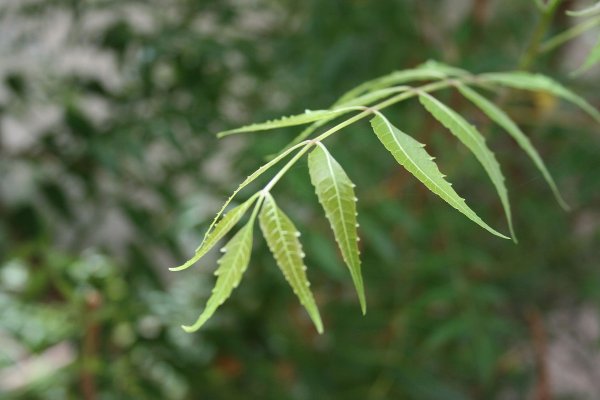
Nika (Vitex negundo) is the shrub Sri Lankan physicians reach for when a joint is hot and swollen. A warmed bundle of its grey-green, five-fingered leaves pressed onto an aching knee is one of the island's oldest treatments for pain — so old that the plant's Sinhala name is woven into place names across the country. What makes nika unusual among traditional remedies is that Sri Lankan scientists tested it in the laboratory two decades ago and found the anti-inflammatory effect real.
Botanical and Cultural Background
Nika is a fast-growing shrub or small tree of the mint family, with aromatic palmate leaves, usually five leaflets, whitish below, and spikes of small lavender flowers. It grows in hedges and along streams throughout Sri Lanka and much of tropical Asia. The leaves contain flavonoids (including vitexin and casticin), iridoids and an essential oil; they are also strongly insect-repellent, and dried leaves are traditionally layered into stored grain and clothing to keep moths and weevils away. In Ayurveda the plant is nirgundi, "that which protects the body from disease".
Traditional Uses in Sri Lankan Medicine
- Joint pain and swelling — warmed leaves applied as a poultice, or a leaf-infused oil (nika thel) massaged into arthritic joints and sprains.
- Fevers and body ache — leaf decoctions, and steam baths with nika leaves in the water.
- Coughs and asthma — leaf juice with bee honey; smoke of the leaves inhaled in older practice.
- Headache — a pillow stuffed with dried leaves, or crushed leaves inhaled.
What the Research Shows
A University of Colombo study demonstrated significant anti-inflammatory and pain-relieving activity of fresh mature leaves in animal models, comparable in some tests to standard drugs (Dharmasiri et al., 2003). A 2023 review in Chemistry & Biodiversity traced the plant from traditional knowledge to modern clinical trials, confirming anti-inflammatory, analgesic, antioxidant and antimicrobial activity mediated through inhibition of COX, LOX and NF-κB pathways, and a 2023 review by Sri Lankan researchers examined its cardioprotective compounds. A registered clinical trial has tested a nika-and-ginger formulation for chronic low-back pain. The evidence for topical and short-term use in musculoskeletal pain is therefore unusually good for a traditional plant; evidence for the other uses remains preclinical.
Evidence updated September 2026.
How Nika Is Prepared
For a poultice, warm a handful of fresh leaves over a low flame or in a dry pan until limp, wrap in a cloth and apply to the painful joint for twenty minutes, twice daily. For nika oil, simmer crushed leaves in coconut oil on the lowest heat until the leaves crisp, then strain and store. A steam bath uses a large bunch of leaves boiled in a pot of water, the patient sitting covered over the steam. Leaf decoction for fever is a tablespoon of dried leaf in two cups of water reduced by half.
Safety and Precautions
Topical use is safe for nearly everyone, though the essential oil occasionally irritates sensitive skin — test a small area first. Internal leaf preparations are traditionally avoided in pregnancy. Do not inhale smoke from burning leaves, an older practice with obvious respiratory risks. Persistent joint swelling, or pain with fever, needs medical assessment; nika can ease symptoms but does not treat the underlying cause of arthritis or infection.

Comments (0)
Leave a Comment