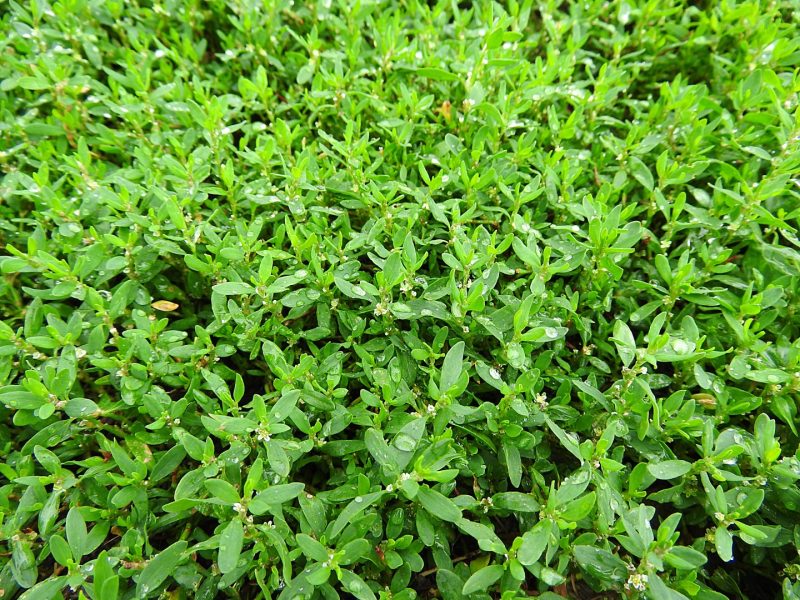
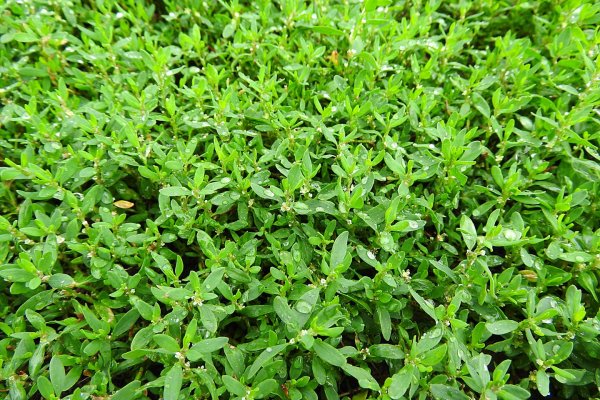
Mukunuwenna (Alternanthera sessilis) is the most unassuming plant on this site and one of the most useful. It is a creeping weed that grows in wet ground almost without encouragement, and it ends up as mallum on Sri Lankan tables more often than almost any other green.
Botanical and Cultural Background
A prostrate, fast-spreading herb of the Amaranthaceae family, mukunuwenna grows in damp and semi-aquatic ground — paddy margins, drains, stream edges — with small opposite leaves and inconspicuous whitish flowers clustered at the leaf joints.
It is treated as a weed in much of the world and as a vegetable here. In Sri Lanka it is cultivated commercially, sold in bundles at every market, and eaten weekly in ordinary households — which is exactly the point of it.
Nutritional and Phytochemical Profile
Mukunuwenna is a good source of provitamin A (beta-carotene), vitamin C, dietary fibre, iron and calcium. Phytochemically it contains sterols, triterpenes and flavonoids including vitexin, which account for its antioxidant activity. Sri Lankan researchers, notably Gunathilake and Ranaweera in a survey of thirty-four local leafy greens, have measured its antioxidant properties alongside other Sri Lankan mallum plants.
Traditional Uses in Sri Lankan Medicine
Cooling the body
Classed as cooling and eaten to reduce what traditional medicine calls excess body heat.
Eye health
Traditionally recommended for weak or blurred vision — a use with a plausible basis, since beta-carotene is converted to vitamin A, which the eye genuinely requires for the cornea and for night vision.
Nutrition and strength
Eaten regularly as a nourishing everyday green.
What the Research Shows
Animal studies have reported hepatoprotective and antioxidant effects for Alternanthera sessilis extracts, and its nutritional composition is well described. Human clinical evidence is essentially absent — but for a vegetable, that is a slightly unfair standard. Its value is as food, and as food it is straightforwardly good.
One common claim needs correcting. Mukunuwenna is often described as having highly bioavailable iron. It does not. Iron from plants is non-haem iron, which the body absorbs far less efficiently than the haem iron in meat or fish — typically a few percent. The vitamin C in the leaves genuinely helps absorption, and eating mukunuwenna is worthwhile, but it is not an equivalent to iron supplements, and this matters for anyone actually anaemic.
How Mukunuwenna Is Prepared
Mukunuwenna mallum: Leaves and tender stems shredded finely and lightly cooked with grated coconut, onion, turmeric and sometimes Maldive fish. Cooking with coconut is not incidental — the fat substantially improves absorption of the fat-soluble beta-carotene.
Kenda: Sometimes made into a herbal porridge.
It is rarely eaten raw, being somewhat tough.
Safety and Precautions
Mukunuwenna is a vegetable eaten across the country and is safe for general consumption, including in pregnancy, where it is a useful source of folate and beta-carotene.
Wash it very thoroughly. This is the practical caution and it is worth taking seriously: mukunuwenna grows in wet, often stagnant ground, including drains and paddy margins, and semi-aquatic greens can carry soil contamination, agricultural chemicals and parasites. Wash in several changes of water and cook it — the usual mallum preparation already does this, which is one reason the traditional method is sound.
If you are anaemic, see a doctor. Anaemia in pregnancy in particular needs proper assessment and usually iron supplementation; it will not be corrected by a leafy green alone, and the plant-iron absorption limits above are why. Anaemia also has causes worth finding rather than simply feeding.
People on warfarin should keep their intake of green leafy vegetables reasonably steady rather than suddenly increasing it, since vitamin K affects the drug. Buy from a reputable source: mukunuwenna is occasionally confused with similar-looking plants, and produce grown in contaminated water is a real concern.



Comments (0)
Leave a Comment