

Sarana (Boerhavia diffusa) sprawls along roadsides and waste ground with pink-purple flowers no bigger than a grain of rice, and most people step over it without a glance. Ayurveda gave it the name punarnava — "that which renews itself" — for the way it springs back after the dry season, and prescribed it for the kidneys, the liver and every kind of swelling. In Sri Lanka it is also simply lunch: sarana kola mellum is a village green. Recent reviews suggest the old physicians chose well.
Botanical and Cultural Background
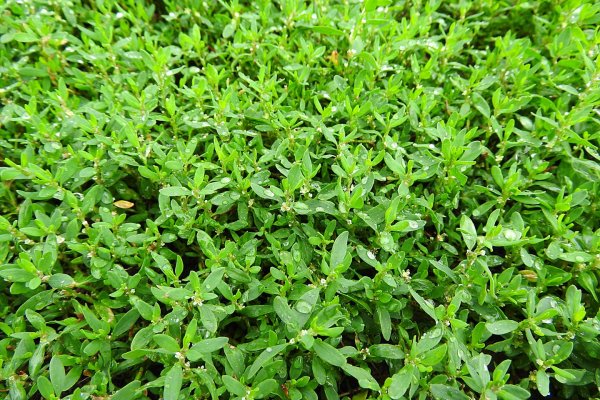
Sarana is a perennial creeping herb with reddish stems, small rounded leaves and a thick, fleshy taproot that survives drought underground. It grows throughout the island's low country, thriving on neglected land. The root is the classical medicinal part, containing punarnavine, boeravinones and a range of flavonoids; the leaves are a nutritious potherb rich in minerals. The plant features in dozens of Ayurvedic formulations, most famously Punarnavadi Mandura for anaemia and oedema.
Traditional Uses in Sri Lankan Medicine
- Swelling and fluid retention — root decoction as a diuretic for oedema of the legs and abdomen.
- Kidney and urinary complaints — decoctions for urinary tract infection and stones.
- Liver and jaundice — a traditional adjunct in hepatitis and "yellow disease".
- Nutrition — leaves cooked as mellum, especially for the weak and anaemic.
What the Research Shows
A 2023 state-of-the-art review in Frontiers in Chemistry catalogued the plant's chemistry and confirmed diuretic, anti-inflammatory, hepatoprotective and immunomodulatory activity across laboratory and animal models. A 2023 review dedicated to its nephroprotective role gathered studies — in vitro, animal and some clinical — covering acute kidney injury, chronic kidney disease, kidney stones and urinary infection, concluding that the evidence for kidney protection is consistent and mechanistically plausible (Mishra et al., 2014 provides the broader pharmacological overview). Animal work in 2022 showed it reduced drug-induced kidney damage, and the boeravinone compounds are now being standardised for quality control. Well-designed human trials remain the missing piece.
Evidence updated September 2026.
How Sarana Is Prepared
For mellum, wash and finely chop young leaves and stems, then cook briefly with grated coconut, onion, green chilli and a little turmeric. For the traditional diuretic decoction, a tablespoon of dried root is boiled in two cups of water until reduced by half and taken twice a day for short courses. Fresh root juice, a teaspoon in water, is another village preparation.
Safety and Precautions
As a cooked green, sarana is safe and nutritious. Root preparations are genuinely diuretic and can lower blood pressure; combine with diuretic or antihypertensive drugs only under supervision, and avoid in pregnancy. Anyone with actual kidney disease should treat sarana as a possible adjunct discussed with their nephrologist, never as a substitute for medical care. Do not confuse it with the similar-looking but unrelated wild plants of waste ground.

Comments (0)
Leave a Comment