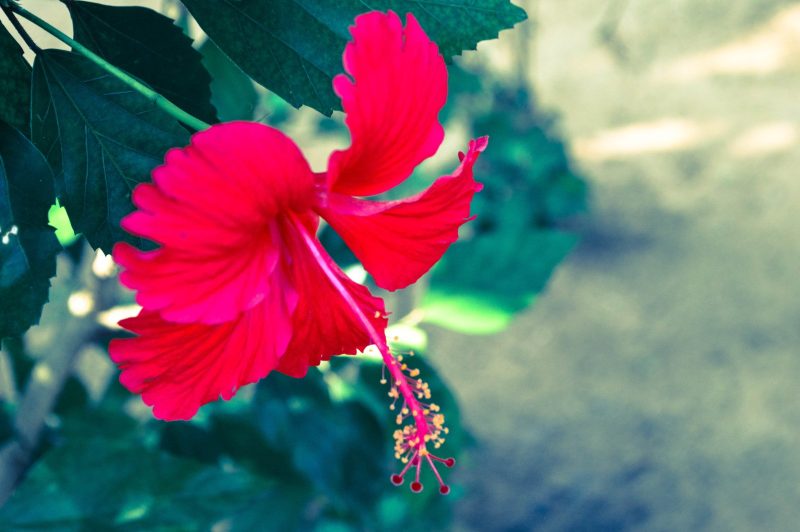
Almost every Sri Lankan garden fence has a sapaththu mal bush, its big red flowers opening each morning and wilting by evening. The name shoe flower comes from the old habit of rubbing the petals on shoes to shine them, but grandmothers used it for hair oil, a slippery leaf hair wash and a ruby-coloured flower tea.
Botanical and Cultural Background
Hibiscus rosa-sinensis is an evergreen shrub of the mallow family (Malvaceae), with glossy, toothed leaves and trumpet-shaped flowers with a long central column of stamens. It came from East Asia long ago but now grows easily from Jaffna to the hill country. For medicine, people choose the classic red single flower. In Sinhala it is sapaththu mal or wada mal; in Sanskrit, japa or japapushpa, regarded in Ayurveda as good for the hair and for bleeding disorders. Red hibiscus is also a common offering at devales and kovils.
Traditional Uses in Sri Lankan Medicine
- Hair oil — flowers and leaves cooked in coconut oil for hair fall, dandruff and early greying, and to cool the head.
- Leaf shampoo — fresh leaves crushed in water give a slippery lather to wash and soften hair.
- Flower tea — petals steeped in hot water as a cooling drink.
- Heavy periods — flower preparations used for excessive menstrual bleeding.
What the Research Shows
Hair: In rats, oil extracts of the leaves and flowers rubbed on shaved skin for 30 days encouraged hair growth, the leaf more than the flower. No human trial has tested hibiscus hair oil.
Blood pressure: A 2015 analysis of five small trials (390 people) found hibiscus tea lowered blood pressure by about 7.6/3.5 mmHg — but that tea is made from roselle (Hibiscus sabdariffa), the sour red calyx of a different plant. No reliable human trial shows that sapaththu mal lowers blood pressure.
Other effects: A 2025 review lists antioxidant, blood-sugar-lowering, cholesterol-lowering and antimicrobial effects of H. rosa-sinensis, almost all from laboratory and animal studies, and notes the lack of human trials.
Fertility: A root extract completely prevented embryo implantation in rats, and flower extracts reduced male fertility in other rat studies.
Evidence updated November 2026.
How Sapaththu Mal Is Prepared
- Hair oil — crush 10 red flowers and a handful of young leaves and cook them in one cup (250 ml) of coconut oil on low heat until the leaves turn crisp. Cool, strain and bottle. Massage into the scalp and wash off after an hour.
- Leaf shampoo — crush a handful of fresh leaves with half a cup of water, squeeze out the slippery liquid, apply to wet hair for 5–10 minutes and rinse.
- Flower tea — steep the petals of 2–3 fresh, unsprayed flowers (green base and stamens removed) in a cup of hot water for 5 minutes. A squeeze of lime turns it from purple to pink. One cup a day is the usual amount.
Safety and Precautions
On the hair it is generally safe; try a little on the skin first, as some people get itching or a rash. Human safety data for the tea are very limited.
- Pregnancy and breastfeeding: do not take hibiscus by mouth if pregnant, trying to conceive or breastfeeding — it was traditionally used to bring on periods, and animal studies show anti-implantation effects.
- Children: the hair wash is fine; do not give the tea to young children.
- Medicines: never use hibiscus tea in place of blood pressure or diabetes treatment. Animal studies suggest it may lower blood sugar, so tell your doctor if you drink it regularly.
- Large doses: very high doses of leaf extract raised liver and kidney markers in mice; avoid concentrated extracts and capsules.
- See a doctor for sudden or patchy hair loss, very heavy periods or dizziness.

Comments (0)
Leave a Comment