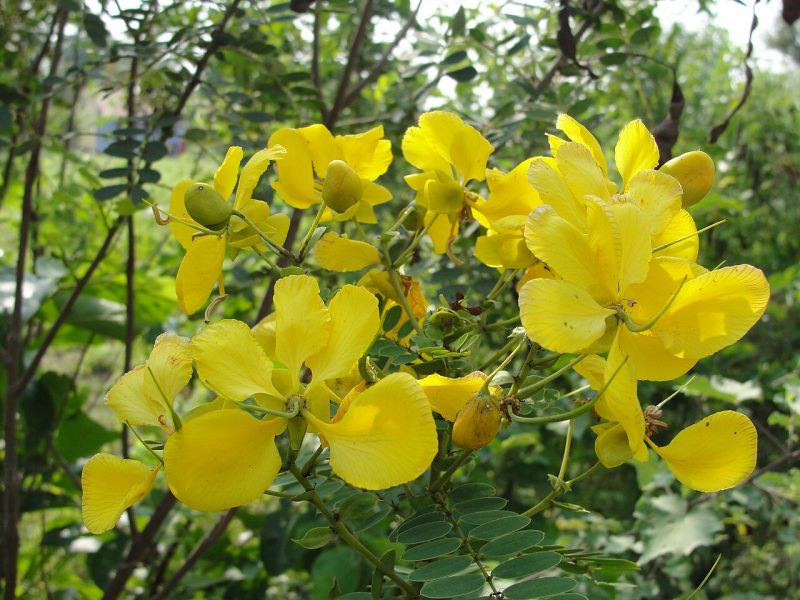
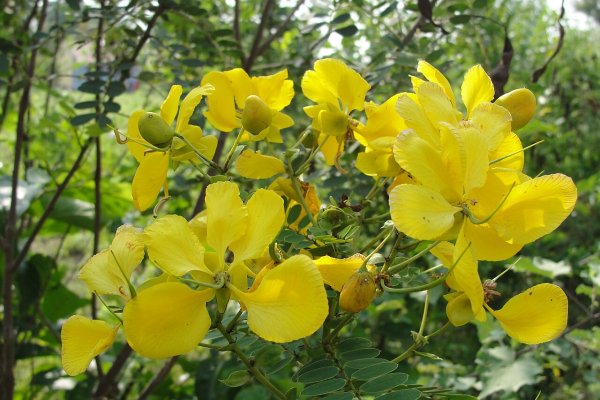
Few sights are more distinctly Sri Lankan than a ranawara bush in flower — a mass of bright yellow against dry scrub. The flowers dried and brewed make one of the country's best-loved herbal teas, drunk daily by people who would not describe themselves as taking medicine at all.
Botanical and Cultural Background
Ranawara (Senna auriculata) is a shrub of the Fabaceae family, growing to two or three metres, with rounded leaflets and vivid yellow flowers carried nearly year-round. It thrives in the dry zone and is common along roadsides and field edges.
Its English name, tanner's cassia, records an industrial past: the bark was used in leather tanning. In Sri Lanka the flowers are the prize, dried and sold everywhere as tea, often taken with a piece of jaggery. Leaves, bark and root all appear in traditional practice.
Traditional Uses in Sri Lankan Medicine
As a daily tea
Ranawara flower tea is drunk as an everyday beverage, valued as a cooling, pleasant alternative to black tea.
Blood sugar
Its most cited medicinal use — the flower and leaf tea has a long traditional association with what was described as "sweet urine disease".
Skin and complexion
Classed traditionally as a raktashodhaka or blood purifier, and used for skin complaints. As elsewhere on this site, that traditional phrase describes clearing heat and impurity, not literal filtration of blood.
Urinary comfort
Used as a mild diuretic for burning and scanty urine.
What the Research Shows
Research on Senna auriculata has examined antidiabetic, antioxidant, anti-inflammatory and antimicrobial activity, largely in laboratory and animal models, and has identified flavonoids, tannins and anthraquinone derivatives. Animal studies fairly consistently report blood-glucose-lowering effects.
Human clinical evidence is thin. The traditional reputation for diabetes is old and widespread across South Asia, but that is not the same as demonstrated effect in people, and ranawara should not be described as an antidiabetic treatment on the strength of rodent studies.
It is worth noting that ranawara belongs to the same genus as senna (Senna alexandrina), the stimulant laxative — but ranawara does not share its purgative strength, and the flower tea is not a laxative in ordinary use.
How Ranawara Is Prepared
Flower tea: A handful of dried flowers simmered in two cups of water for around five minutes, strained, and taken with jaggery if desired.
Leaf tea: Prepared similarly, more bitter than the flowers.
Face pack: Dried flowers ground with water or milk and applied.
Safety and Precautions
Ranawara flower tea is drunk daily across Sri Lanka and is well tolerated. It is among the gentler herbs on this site, and as an everyday beverage it is a reasonable choice.
If you take diabetes medication, be aware of an additive effect. Because ranawara may lower blood glucose, drinking it in quantity alongside prescribed medication can risk hypoglycaemia. Tell your doctor, monitor your levels, and never reduce or stop prescribed treatment in favour of a herbal tea — diabetes is a progressive condition and poor control damages the eyes, kidneys and nerves silently over years.
Urinary symptoms are not a job for a diuretic tea. A urinary tract infection needs assessment and usually antibiotics; untreated, it can ascend to the kidneys and cause serious illness. Burning that persists, or comes with fever or back pain, means see a doctor.
Avoid medicinal quantities in pregnancy without advice; occasional flower tea is generally regarded as fine. Stop medicinal use before planned surgery given the blood sugar effect.


_Alston_Family_COCHLOSPERMACEAE_(7).jpg)
_DC._var._vaginalis_(2790037054).jpg)
Comments (0)
Leave a Comment