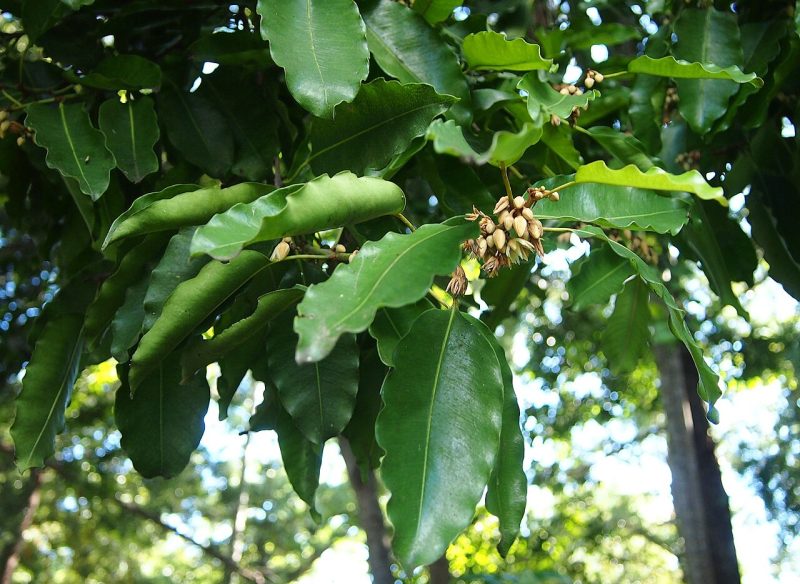
Munamal (Mimusops elengi) drops small star-shaped cream flowers that keep their scent long after they have dried and browned — which is why they end up in cupboards, pillows and hair. The tree's medicinal reputation, though, rests on its bark, and on one specific thing: gums.
Botanical and Cultural Background
Munamal is a handsome evergreen of the Sapotaceae family with dense dark foliage, planted for shade and scent in gardens and temple grounds across Sri Lanka. It bears orange berries and extremely hard timber — the origin of its English name, bullet wood.
Its flowers are gathered for their persistent fragrance; its bark is the medicine.
Traditional Uses in Sri Lankan Medicine
Gums and teeth
Its defining use — bark decoction as a mouthwash, or bark powder to massage gums, for bleeding gums and loose teeth.
Mouth ulcers and breath
The astringent decoction used as a rinse.
Headache
Dried flowers inhaled or kept near the pillow.
Wounds
Bark and leaves applied externally.
What the Research Shows
Mimusops elengi bark is rich in tannins, along with saponins and flavonoids. Tannins are astringent — they precipitate proteins and cause tissues to contract, which is exactly the sensation of a munamal rinse and a real basis for its traditional effect on inflamed, bleeding gum tissue. Laboratory studies report antibacterial activity against oral bacteria, and small studies have examined munamal-based mouthwashes against plaque and gingivitis with some positive findings.
So the traditional use is mechanistically sensible and modestly supported — better than most. But there is an important limit. Astringency tightens tissue; it does not cure the disease underneath.
How Munamal Is Used
Mouthwash: Bark boiled in water, strained, cooled and used as a rinse.
Tooth powder: Dried bark and flowers ground, used to massage the gums.
For scent: Dried flowers in a cloth near the pillow.
Safety and Precautions
Munamal is safe as a mouthwash and among the gentler remedies here. The important point is not toxicity but what the symptoms mean.
Bleeding gums and loose teeth are periodontal disease, and it does not go away with rinsing. Bleeding gums signal gingivitis; teeth that loosen mean the infection has already destroyed bone around the roots — and that bone does not grow back. A dentist can clean below the gumline and stop the process; a rinse cannot. Munamal may firm the tissue and make gums feel better while the underlying disease quietly continues, which is precisely the risk. Use it if you like the ritual, but get the teeth cleaned properly.
Dental caries do not reverse. A cavity is lost tooth structure and needs a filling. No mouthwash restores it.
Do not swallow large amounts of the decoction — it is high in tannins, which can cause nausea and reduce absorption of medicines. Internal use for other purposes should involve a qualified practitioner. Avoid medicinal internal use in pregnancy without advice.

Comments (0)
Leave a Comment