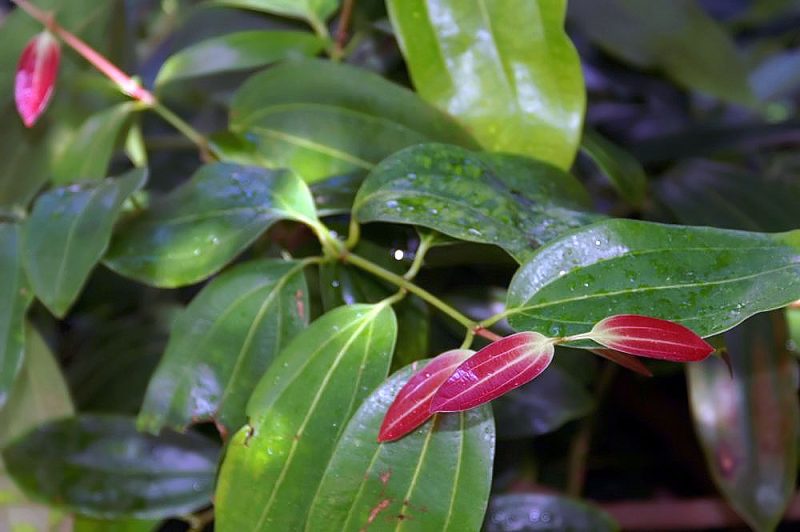
Kurundu (Cinnamomum verum) is Sri Lanka's most famous export and the reason European fleets once fought over this coastline. It is also the subject of a great deal of confident health writing, much of which is about a different plant. Ceylon cinnamon has one genuine, measurable advantage over its rivals — and it is not the one usually advertised.
Botanical and Cultural Background
Ceylon cinnamon comes from an evergreen tree of the Lauraceae family, native to Sri Lanka, where it has been cultivated for well over a thousand years. The spice is the inner bark: harvested shoots are peeled, the bark rolled by hand into fine, fragile, multi-layered quills that curl in on themselves and crumble easily.
That structure distinguishes it at a glance from cassia (Cinnamomum cassia and related species), the cinnamon sold across most of the world, whose bark is a single thick, hard, dark layer that curls from both sides. Ceylon cinnamon is paler, more delicate and sweeter; cassia is harsher and more pungent. Most "cinnamon" internationally is cassia.
Traditional and Culinary Uses
Digestion
A traditional carminative, used for bloating, gas and sluggish digestion.
Colds and warmth
Classed as warming and used in preparations for chills and colds.
In cooking
Kurundu is fundamental to Sri Lankan cooking and curry powders, and the leaf yields its own oil.
What the Research Shows
The coumarin difference is the real story, and it is genuinely in Sri Lanka's favour. Cassia cinnamon contains high levels of coumarin, a compound that is hepatotoxic in sufficient quantity. European food safety authorities set a tolerable daily intake for coumarin, and heavy cassia consumption can approach or exceed it — which is why regulators have issued advisories about cassia. Ceylon cinnamon contains only trace amounts. This is a real, measurable, verifiable advantage, and it is the strongest reason to prefer true cinnamon.
The blood sugar claims need more care than they usually get. Cinnamon is widely promoted for type 2 diabetes, and there are positive trials — but two things are usually left out. First, much of the well-known research, including the frequently cited Khan trial, used cassia, not Ceylon cinnamon. Second, the overall evidence is inconsistent: a Cochrane review of cinnamon for diabetes concluded there was insufficient evidence to support its use, and later reviews remain mixed. Sri Lankan researchers, notably Ranasinghe and colleagues in Colombo, have reviewed Cinnamomum zeylanicum specifically and describe promising pharmacology alongside a need for better human trials.
So the honest position is that Ceylon cinnamon is a delicious, low-coumarin spice with interesting pharmacology and unsettled clinical evidence for blood sugar. It is not established as a diabetes treatment, and it is not a weight loss agent.
How Kurundu Is Prepared
Cinnamon tea: A quill simmered in water for around ten minutes and strained.
In cooking: Added whole to curries and rice.
Chewed: A small piece after a meal, traditionally for digestion.
Safety and Precautions
Ceylon cinnamon used as a culinary spice is safe for most people, and its low coumarin content means it does not carry cassia's main concern. If you buy cinnamon for regular medicinal use, buying true Ceylon cinnamon is a sound decision — and in Sri Lanka you are already at the source.
Do not treat diabetes with cinnamon. If you take diabetes medication and also consume cinnamon in large medicinal quantities, be aware of a possible additive blood-sugar-lowering effect, and tell your doctor rather than adjusting your own medication. Never reduce or stop prescribed treatment in favour of a spice.
Cinnamon in medicinal quantities is best avoided in pregnancy without advice; culinary use is fine. Cinnamon oil is concentrated and can burn skin and mucous membranes — it should not be swallowed or applied undiluted, and cinnamon bark chewed excessively can irritate the mouth. If you take anticoagulants, discuss regular high intake with your doctor. Stop medicinal quantities before planned surgery.

_in_Hyderabad,_AP_W_IMG_0025.jpg)
Comments (0)
Leave a Comment