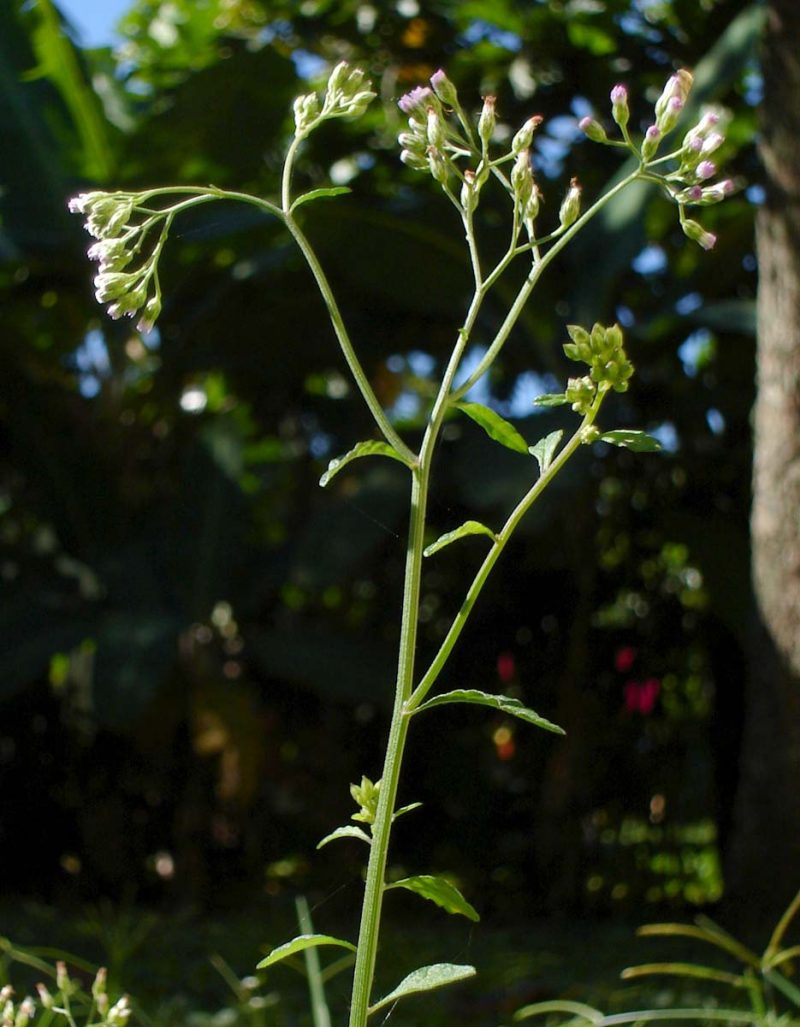
Monarakudumbiya (Vernonia cinerea) is a weed so ordinary that it grows through cracks in Sri Lankan pavements. It also happens to be the subject of something genuinely unusual on this site: real clinical trials, in people, for helping smokers quit — a use that sounds like folklore and turns out to have evidence behind it.
Botanical and Cultural Background
Monarakudumbiya is a slender annual of the Asteraceae family — the daisy family — growing to half a metre, topped with small tufted purple-pink flower heads that turn to fluffy seed. It appears on roadsides, in gardens and across waste ground everywhere.
Its Sinhala name refers to the peacock's crest, after the tufted flowers. The whole plant is used.
Traditional Uses in Sri Lankan Medicine
Liver complaints
Traditionally given for jaundice, usually as kenda, alongside herbs such as heen bovitiya.
Fevers
A decoction of the whole plant is a traditional fever remedy.
Helping stop smoking
Chewing the plant, or taking it as a tea, is a traditional practice across parts of Asia said to reduce the desire for tobacco.
Wounds
Crushed leaves applied to cuts and skin sores.
What the Research Shows
The smoking cessation research is the interesting part. Thai researchers have run randomised controlled trials of Vernonia cinerea preparations as an aid to quitting smoking, reporting increased quit rates and reduced craving compared with control, and the plant has been used in Thai public health smoking cessation programmes. The trials are relatively small and centred in one country, so this is a promising and unusual finding rather than a settled one — but it is real human evidence, which is more than most traditional uses ever accumulate.
Beyond that, laboratory and animal studies have examined anti-inflammatory, antioxidant, antipyretic and hepatoprotective activity, and identified flavonoids and sesquiterpene lactones.
Two claims should be dropped. The plant does not treat malaria — malaria is diagnosed with a blood test and treated with antimalarial drugs, and delay is dangerous; Sri Lanka is certified malaria-free but imported cases still occur, and a fever after travel needs testing, not a decoction. And while animal studies show protection against chemically induced liver injury, that does not make it a treatment for jaundice, hepatitis or fatty liver in people.
How Monarakudumbiya Is Prepared
Kenda: Whole plant juice cooked with rice and coconut milk.
Decoction: Whole plant boiled and strained.
For smoking: In the studied Thai preparations, the plant was taken as an infusion or extract; traditionally it is chewed.
Safety and Precautions
Monarakudumbiya is generally well tolerated and is among the gentler plants here.
Yellow eyes or skin need a doctor and blood tests rather than porridge. Jaundice has causes ranging from viral hepatitis to gallstones to drug toxicity to cancer, which differ completely in urgency, and only testing distinguishes them.
A fever that persists beyond two days needs assessment — in Sri Lanka that means considering dengue, which kills through plasma leakage as the fever falls.
If you want to stop smoking, the evidence-based options — nicotine replacement, prescribed medication and behavioural support — remain far better established than any herb, and Sri Lanka has cessation services. Monarakudumbiya is an interesting adjunct, not a first-line plan.
As a member of the daisy family it may cause reactions in people allergic to Asteraceae plants. Avoid medicinal quantities in pregnancy and breastfeeding without professional advice, and seek advice first if you have kidney disease.



Comments (0)
Leave a Comment