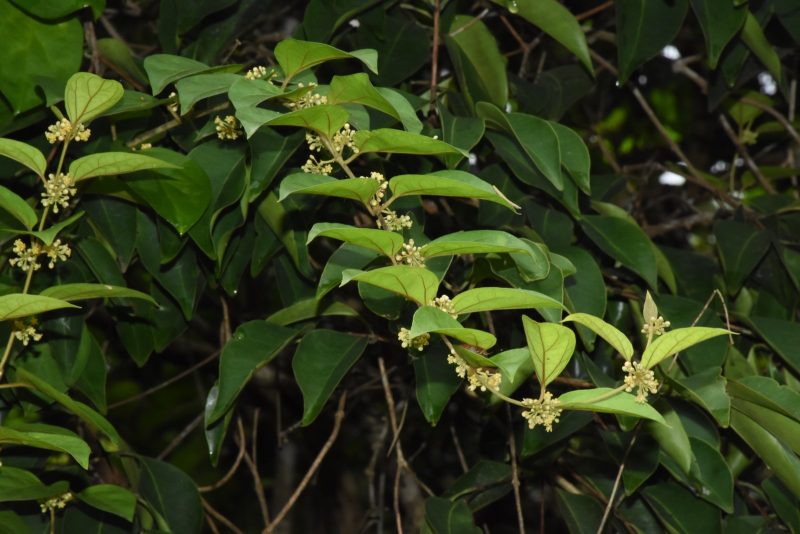
Chew a fresh leaf of masbedda (Gymnema sylvestre) for a minute, then put a pinch of sugar on your tongue: the sweetness has vanished and it feels like fine sand. This slender climbing vine, once gathered from scrub jungle and now trained over many home-garden fences, is one of the first plants Sri Lankans turn to when told they have “sugar”. Its Hindi name, gurmar, means “sugar destroyer”.
Botanical and Cultural Background
Masbedda is a woody, twining climber of the family Apocynaceae. It has soft, oval, pointed leaves in opposite pairs, tiny pale-yellow flower clusters, and slender paired pods that curve like a ram’s horns, which gave it the Sanskrit name meshashringi (“ram’s horn”). Another Sanskrit name, madhunashini, means “destroyer of sweetness”. It grows wild in parts of Sri Lanka and southern India but is now uncommon in the wild, so most leaf comes from cultivated plants. Jayaweera lists it among Sri Lanka’s Ayurvedic plants. Kurinnan (Gymnema lactiferum) is a close relative, and books sometimes mix up the two names.
Traditional Uses in Sri Lankan Medicine
- Madhumeha (diabetes) — fresh leaves chewed, or a leaf tea or dried leaf powder taken daily alongside a careful diet.
- Compound diabetes remedies — dried leaf combined with other herbs, such as kothala himbutu, in Ayurvedic decoctions and powders.
- Sweet cravings — a leaf chewed before tea or a meal, so that sweets taste flat and are easier to refuse.
What the Research Shows
The leaves contain gymnemic acids, which temporarily block the sweet-taste receptors on the tongue. In a small New Zealand crossover trial of 56 healthy adults, a mint containing 4 mg of gymnemic acids cut the amount of chocolate eaten in the following minutes by about a fifth compared with a placebo mint, mainly because the chocolate tasted less pleasant and people wanted less of it. This is a short-term taste effect, not proof of lasting changes in diet or weight.
For blood sugar, two systematic reviews have pooled small studies. One combined 10 studies (419 people with type 2 diabetes) and reported lower fasting and after-meal sugar and HbA1c, but it compared people with their own starting values rather than with a control group, and results varied widely. The other pooled 6 randomised trials in adults and found lower fasting sugar, blood fats and diastolic blood pressure, but rated the trials low quality. In short, masbedda may lower blood sugar modestly, but large, well-run trials are still missing. One case of toxic hepatitis has been reported in a person taking it for diabetes.
Evidence updated November 2026.
How Masbedda Is Prepared
- Fresh leaf — chew one or two washed leaves about 15 minutes before a meal.
- Leaf tea — one teaspoon of dried, crushed leaves (or one masbedda tea bag) in a cup of just-boiled water, covered for 5–10 minutes; once or twice a day.
- Decoction — a small handful of fresh leaves (about 10–15) boiled in two cups of water until one cup remains; drink half in the morning, half in the evening.
- Leaf powder — half a teaspoon of shade-dried leaf powder in warm water, in the dose your Ayurvedic doctor advises.
Safety and Precautions
Masbedda is used to lower blood sugar, so taken with tablets such as metformin or gliclazide, or with insulin, it can push sugar too low. Watch for shaking, sweating, sudden hunger or confusion, check your sugar more often, and tell your doctor you are using it. Never stop or reduce prescribed diabetes medicine on your own — masbedda does not replace it.
Some people get mild stomach upset. Rarely, liver injury has been reported: stop it and see a doctor if you notice yellow eyes, dark urine or unusual tiredness. There is not enough safety information for pregnancy or breastfeeding, so avoid it then, and do not give it to children unless a doctor advises. People with liver or kidney disease should ask their doctor first.

Comments (0)
Leave a Comment