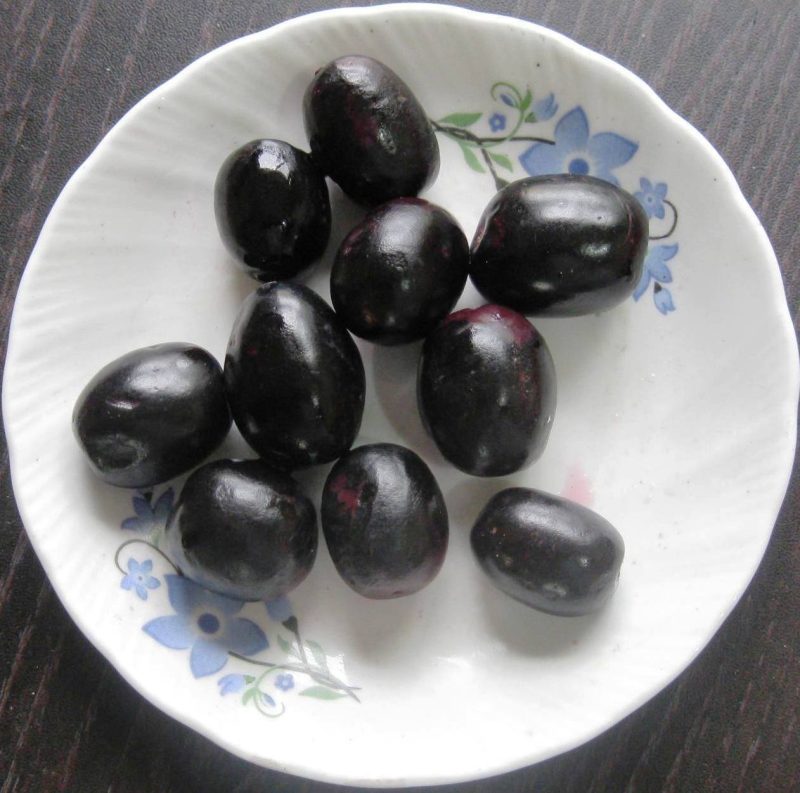
Madan (Syzygium cumini) stains your tongue purple and your fingers with history. Before insulin existed, European physicians were already prescribing powdered jambul seed for diabetes — the plant has accumulated more than 125 years of published research on that single question, which may be a record for any traditional remedy (Helmstädter, 2008). In Sri Lanka the tree needs no introduction: its astringent, sweet-sour fruit is a beloved roadside snack of the dry season.
Botanical and Cultural Background
Madan is a large evergreen tree of the myrtle family (Myrtaceae), the same family as cloves and eucalyptus. It grows throughout Sri Lanka's low country, fruiting in heavy purple-black clusters. The fruit is eaten fresh, often with a pinch of salt; birds, bats and schoolchildren compete for the harvest. Across South Asia the tree is planted near homes and temples, and in Ayurveda it carries the name jambu — ancient enough that India itself was classically called Jambudvipa, "the island of the jambul tree".
Traditional Uses in Sri Lankan Medicine
Each part has a distinct traditional role:
- Seeds — dried and powdered, the classic preparation for madhumeha (diabetes), taken with warm water before meals.
- Bark — strongly astringent; decoctions are used for diarrhoea, dysentery and as a gargle for mouth and throat complaints.
- Fruit — a cooling, digestive food, traditionally recommended in moderation for those with "sweet urine".
- Leaves — used in compound preparations for digestive and skin conditions.
What the Research Shows
The research record is unusually long but honestly mixed. A historical review tracing studies back to the 1880s found roughly a hundred pre-insulin case reports of jambul seed lowering urinary sugar, followed by many animal studies showing reduced blood glucose, improved antioxidant status and protection of insulin-producing cells (Helmstädter, 2008). Modern reviews catalogue an impressive chemistry — anthocyanins in the fruit, jamboline and ellagitannins in the seed — with laboratory evidence for antidiabetic, anti-inflammatory and antimicrobial activity (Ayyanar & Subash-Babu, 2012).
The honest caveat: well-designed modern human trials remain few, and those that exist show more modest effects than the animal work suggests. Madan is best understood as a nutritious food with a credible supporting role in blood sugar management — not a standalone treatment.
How Madan Is Prepared
The fruit needs no preparation beyond washing — eat it fresh in season. For the traditional seed preparation, the seeds are washed, sun-dried thoroughly, and ground to a fine powder; a teaspoon is taken with warm water before meals. Bark decoctions are made by boiling a small piece of bark in two cups of water down to one, used cool as a gargle or taken for acute diarrhoea.
Safety and Precautions
The ripe fruit is a safe, healthy food for nearly everyone. Concentrated seed or bark preparations deserve the same caution as any glucose-lowering agent: diabetics on medication should monitor for additive effects and involve their doctor. The bark's tannins can cause constipation with prolonged use, and unripe fruit in quantity is intensely astringent. Pregnant women should keep to the fruit as food and avoid concentrated preparations.

Comments (0)
Leave a Comment