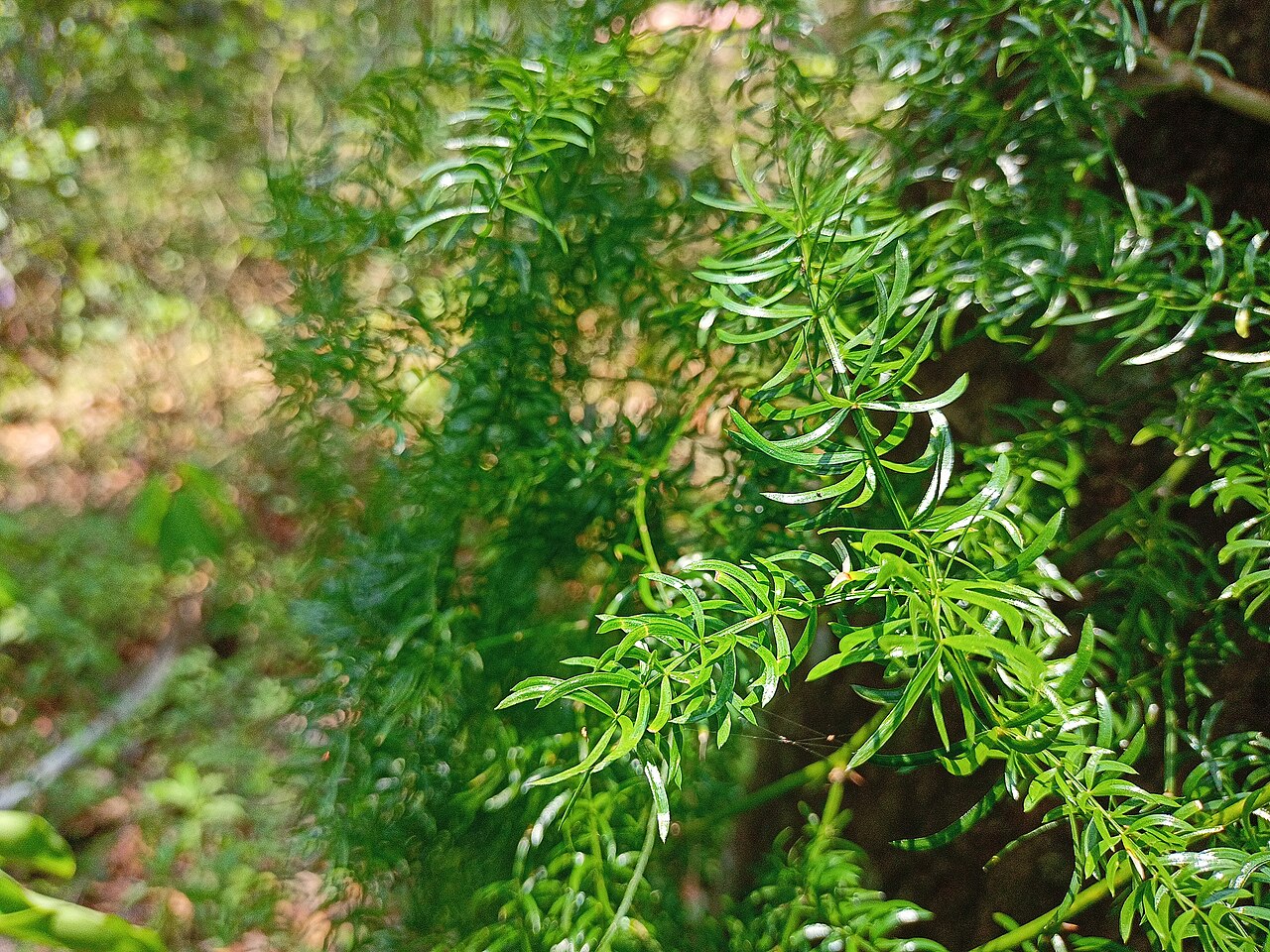
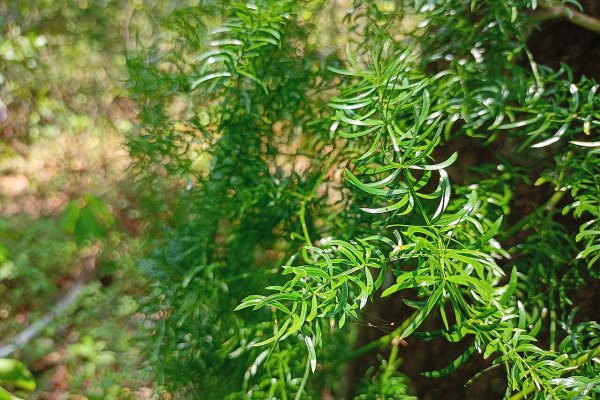
Hathawariya (Asparagus racemosus) carries a name that tells you how it has been understood: shatavari, commonly glossed as "she who possesses a hundred husbands" — a frank reference to its reputation as a tonic for female fertility and vitality. It is among the most used herbs in Ayurveda for women's health, and among the least tested in the ways that would let us say whether it works.
Botanical and Cultural Background
Hathawariya is a climbing perennial of the Asparagaceae family, armed with small spines, bearing needle-like cladodes rather than true leaves and small fragrant white flowers. Beneath the ground it forms a cluster of finger-like tuberous roots — the medicinal part.
In Sri Lanka it has two lives. The roots are a classical Ayurvedic medicine, while the tender shoots and leaves are cooked into hathawariya kenda, one of the more popular herbal porridges, eaten as breakfast rather than as treatment.
Traditional Uses in Sri Lankan Medicine
Women's reproductive health
Its defining use — traditionally given across the female life course, from menstrual irregularity through to menopausal complaints.
Breast milk production
Hathawariya is the classical galactagogue of Ayurveda, given to nursing mothers.
Stomach and acidity
The root is mucilaginous and cooling, and is traditionally used for hyperacidity and gastric discomfort.
General restoration
Used as a rasayana for convalescence and stamina in both men and women.
What the Research Shows
Research on Asparagus racemosus has identified steroidal saponins known as shatavarins, along with polysaccharides and flavonoids, and has examined effects on lactation, immune function, gastric mucosa and hormones — largely in laboratory and animal models.
Human evidence is limited and of modest quality. Small studies on lactation exist and reviews of galactagogues generally conclude that the evidence for herbal options, shatavari included, is insufficient to recommend them with confidence. For menopausal symptoms and fertility the position is similar: plausible traditional use, sparse human data.
This does not make hathawariya useless — it makes its reputation older than its evidence, which is worth knowing before spending money on it.
How Hathawariya Is Prepared
Kenda: Fresh shoots and leaves blended, the juice cooked with rice, coconut milk and garlic.
Root powder in milk: Half a teaspoon of dried root powder in warm milk.
Classical preparations: Shatavari appears in compound Ayurvedic formulations including medicated ghees.
Safety and Precautions
Hathawariya is eaten as food in Sri Lanka and is generally well tolerated, which places it among the gentler herbs here.
The phytoestrogen question is the important one. Hathawariya has oestrogenic activity, so anyone with an oestrogen-sensitive condition — including certain breast cancers, endometriosis, uterine fibroids or a history of these — should not take the root medicinally without discussing it with their doctor. This also applies if you take tamoxifen, hormone replacement therapy or hormonal contraception.
If you are struggling with breast milk supply, see a lactation consultant or your doctor first. Supply problems usually respond to attachment and feeding-frequency support, and that help is effective in a way a herb has not been shown to be. Reaching for shatavari while an underlying feeding problem persists costs time that matters in the early weeks.
Because it belongs to the asparagus family, people allergic to asparagus should avoid it. It may add to the effect of diuretics. Avoid medicinal quantities in pregnancy without professional advice — traditional use in pregnancy exists but should be supervised. Persistent menstrual irregularity, unusual bleeding or menopausal symptoms severe enough to need treatment deserve a medical assessment rather than indefinite self-treatment.



Comments (0)
Leave a Comment