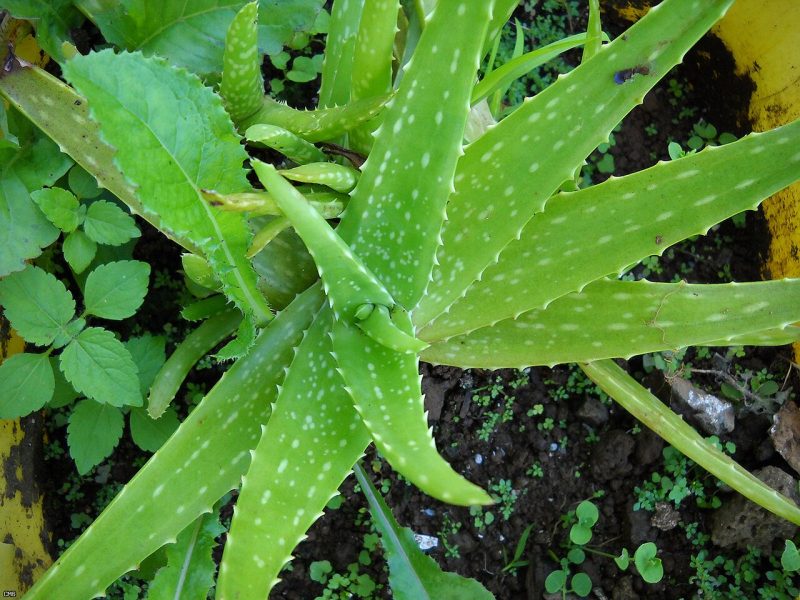
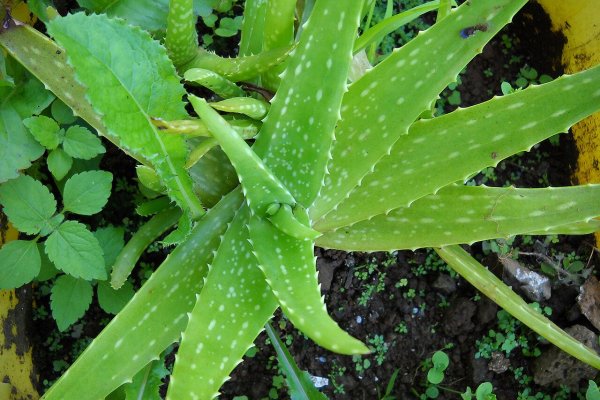
Komarika (Aloe vera) sits in a pot by countless Sri Lankan kitchen doors for one very good reason: when you burn yourself, it is right there and it works. Its topical reputation is largely deserved. What is far less well known is that the same leaf contains a second substance entirely — and that one is a regulatory problem in several countries.
Botanical and Cultural Background
Aloe vera is a short-stemmed succulent of the Asphodelaceae family, storing water in thick fleshy leaves edged with soft teeth. It grows almost without care in Sri Lankan gardens and pots.
Phytochemistry — Two Substances, One Leaf
This distinction is the whole point of the page. The inner gel is about 99% water, with polysaccharides — glucomannans, acemannan — plus vitamins, enzymes and salicylates. It is the part used on skin.
Just beneath the green rind sits a bitter yellow latex, rich in aloin, an anthraquinone and a powerful stimulant laxative. It is an entirely different material with entirely different risks, and separating the two properly is what makes aloe safe to use.
What the Research Shows
Burns and wounds — the good evidence
Aloe gel is one of the better-supported topical herbal remedies. A systematic review by Maenthaisong and colleagues found aloe shortened healing time in first- and second-degree burns, and its collagen-promoting and cooling effects are well described. For minor kitchen burns and sunburn, it is a reasonable thing to reach for.
Skin hydration and hair
The mucopolysaccharides bind moisture, and the gel is a genuinely good conditioner. Claims about reversing wrinkles are marketing.
Oral aloe — the complication
Aloe latex was once widely sold as a laxative. In 2002 the US FDA removed aloe from over-the-counter laxative products because manufacturers did not supply the safety data required, and the International Agency for Research on Cancer has classified aloe vera whole-leaf extract as possibly carcinogenic to humans (Group 2B), based on rat studies showing intestinal tumours. Purified inner-gel products are viewed differently from whole-leaf preparations — but "aloe juice" on a shelf may be either.
How Komarika Is Used
For a burn: Slice a leaf, scoop the clear inner gel, apply directly. Let the cut leaf drain the yellow latex away first, and rinse the gel.
For hair: Pure inner gel massaged into the scalp, left an hour, washed out.
Preparing it properly means taking the clear gel only and discarding everything yellow.
Safety and Precautions
Topical aloe gel is safe for nearly everyone, and this is genuinely one of the more useful plants on this site. Do a patch test if your skin is sensitive.
Serious burns need a hospital, not a plant. Aloe is for minor kitchen burns and sunburn. Burns that blister extensively, are larger than the palm of the hand, are deep, white or charred, painless (which means nerve damage), or involve the face, hands, feet, genitals or a joint need medical care — as do burns in babies and elderly people. Cool a burn under running water for twenty minutes first; that matters more than anything you put on it afterwards. Never apply aloe, oil, butter or toothpaste to a serious burn.
Do not drink whole-leaf aloe products. The latex is a stimulant laxative that causes cramping and electrolyte loss, prolonged use leads to dependence, and whole-leaf extract carries the IARC Group 2B classification. If you use any oral aloe product, it should be a purified, decolourised inner-gel preparation — and even then, not for long periods.
Do not take aloe internally in pregnancy — the latex is a uterine stimulant — or while breastfeeding. Do not give oral aloe to children. Because of laxative-driven potassium loss it can interact with digoxin and diuretics, and it may lower blood sugar. Stop oral use before surgery, and avoid it entirely if you have inflammatory bowel disease or unexplained abdominal pain.



Comments (0)
Leave a Comment