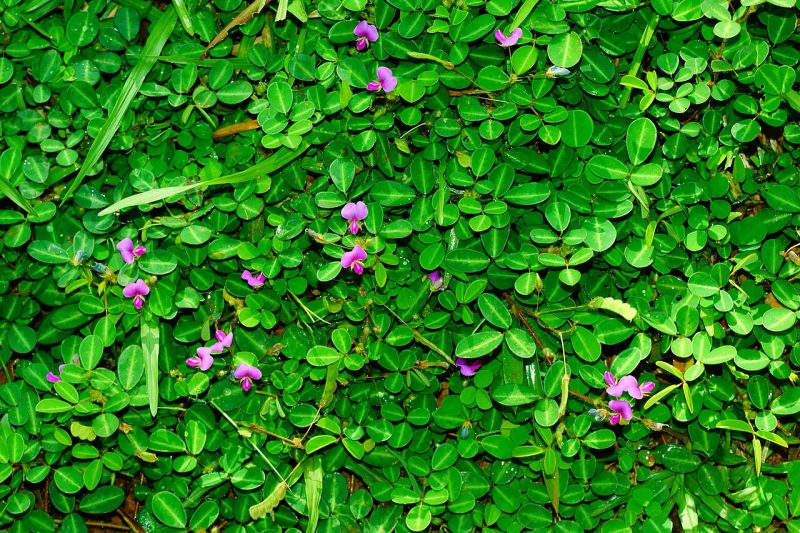
Heen Undupiyaliya (Desmodium triflorum) carpets Sri Lankan lawns and is mown down weekly by people who have no idea it is medicine. It is the plant villagers grab and crush onto a cut without breaking stride — and it is also given for dysentery, which is where care is needed.
Botanical and Cultural Background
A tiny creeping perennial of the Fabaceae family, heen undupiyaliya spreads flat across the ground with three-part leaves and minute purple-pink pea flowers. It roots as it goes, forming a dense mat in grass, gardens and roadsides.
Its ordinariness is precisely its value: it is always to hand, which is why it became a first-aid plant.
Traditional Uses in Sri Lankan Medicine
Cuts and wounds
Its most familiar use — crushed between the fingers and pressed onto a fresh cut.
Loose stools
The astringent decoction taken traditionally for diarrhoea.
Cooling
Made into kola kenda during hot weather for body heat and burning urine.
Cough
Occasionally used for dry cough.
What the Research Shows
Research specific to Desmodium triflorum is limited. The genus is better studied — several Desmodium species show antioxidant, anti-inflammatory and antimicrobial activity in laboratory models, and the plants contain tannins and flavonoids. The tannins are a real basis for the astringent effect people feel, and plausibly for its use on wounds.
Human clinical evidence is absent. Its standing rests on convenience and long use, which is honest enough for a first-aid plant.
How It Is Prepared
First aid: Fresh plant crushed and pressed onto a minor cut.
Kola kenda: Leaf juice with rice flour and coconut milk.
Decoction: Whole plant boiled and strained.
Safety and Precautions
Dysentery is not something to cure at home, and "solidifying the stool" is the wrong goal. This deserves to be plain. Dysentery means diarrhoea with blood or mucus, and it is usually Shigella or amoebiasis — infections that need diagnosis and specific treatment. An astringent decoction may firm the stool while the infection continues underneath, which is worse than useless.
More importantly, what kills in acute diarrhoea is dehydration, especially in children — and the treatment is oral rehydration solution, fluid and salts, available from any pharmacy and one of the most effective treatments in all of medicine. Give ORS first, always.
Take a child to a doctor if there is blood in the stool, persistent vomiting, no urine for many hours, sunken eyes, drowsiness or floppiness. Adults need care for bloody diarrhoea, high fever or diarrhoea lasting beyond a few days.
The plant itself is well tolerated externally and as food. Wash it exceptionally well: it grows flat on the ground where dogs, cats and other animals pass, and soil and animal contamination is a genuine concern — as is pesticide, if it came from a treated lawn. For anything beyond a minor scrape — deep wounds, dirty wounds, anything that might need a tetanus booster — see a doctor.


_Alston_Family_COCHLOSPERMACEAE_(7).jpg)
_DC._var._vaginalis_(2790037054).jpg)
Comments (0)
Leave a Comment