.jpg)
Domba (Calophyllum inophyllum) leans over Sri Lankan beaches with its thick glossy leaves, dropping round green nuts into the sand. Press those nuts and you get a dark green, heavy, strong-smelling oil that the global cosmetics industry now sells as tamanu — one of the few Sri Lankan traditional remedies with a genuine international market.
Botanical and Cultural Background
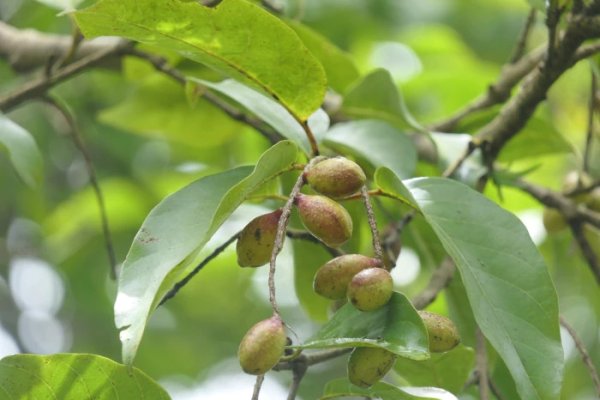
Domba is a large low-branching evergreen of the Calophyllaceae family, salt-tolerant and wind-resistant, growing along coastlines and riverbanks. It bears fragrant white flowers with yellow stamens and spherical fruit containing a single large seed.
The seeds are sun-dried for weeks until they darken and sweat oil — the traditional process, and one that turns out to matter chemically, since the resinous compounds develop during drying.
Traditional Uses in Sri Lankan Medicine
Wounds and skin regeneration
Its defining use — domba oil applied to cuts, burns, scrapes and ulcers.
Skin conditions
Applied traditionally for eczema, ringworm and acne.
Scars
Massaged into old scars and stretch marks.
Joint and nerve pain
Used as a massage liniment for rheumatism and sciatica.
What the Research Shows
Tamanu oil is better studied than most traditional oils. It contains calophyllolide, a 4-phenylcoumarin with documented anti-inflammatory activity, along with calophyllic acid, resins and fatty acids. Research reports wound-healing, antibacterial and anti-inflammatory effects in laboratory and animal models, and there is genuine interest in its wound-repair chemistry. Related Calophyllum compounds — the calanolides — were investigated as antiviral leads, which gives some sense of the genus's chemical interest.
Human clinical evidence remains thin, and claims about penetrating all three skin layers are marketing rather than measurement. Still, as traditional oils go, domba has a real mechanistic basis.
How Domba Oil Is Used
On skin: Applied directly to clean, intact or lightly grazed skin.
As liniment: Warmed and massaged into aching joints.
On scars: Worked in regularly over weeks.
Safety and Precautions
Do not treat a diabetic foot ulcer with domba oil or any home remedy. This has to be said plainly because the oil's wound reputation invites exactly that. Diabetic ulcers become infected easily, reach bone, and are a leading cause of amputation — they need urgent specialist wound care, offloading and often antibiotics. A non-healing wound in someone with diabetes is a medical emergency unfolding slowly, and weeks lost to oil are weeks that cost limbs.
Do not put domba oil in your eyes. Some older sources describe eye applications. The eye is intolerant of oils and non-sterile material, and eye symptoms need a doctor.
Domba oil is for external use only — never swallow it. The seeds contain toxic compounds, and the oil is not food. Keep the nuts away from children.
Patch test before wider use: tamanu is a tree nut oil and allergic reactions occur, particularly in people with nut allergies. Do not apply it to deep, dirty or heavily contaminated wounds — those need cleaning and possibly a tetanus booster. Avoid it on active infection. Persistent skin disease deserves a diagnosis, since psoriasis and chronic eczema have effective treatments.

Comments (0)
Leave a Comment