

Divul (Limonia acidissima) is the fruit you crack open with a stone. Behind its grey, wooden shell lies a dark, sticky, sour-sweet pulp that Sri Lankans beat with jaggery and coconut milk into divul kiri, one of the dry zone's great seasonal drinks. The same pulp is a traditional remedy for the stomach, and the tree — a relative of the sacred beli — carries a substantial pharmacology that researchers have only recently begun to catalogue properly.
Botanical and Cultural Background
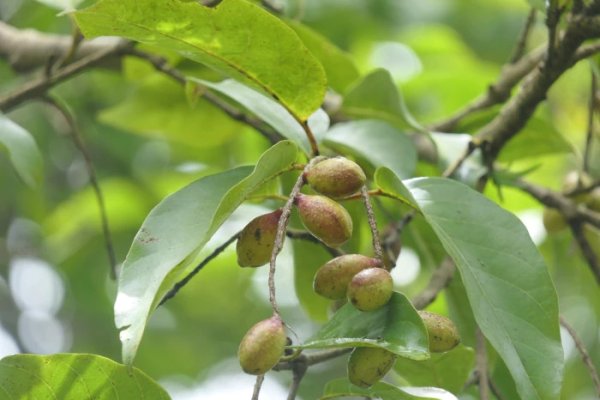
Wood apple is a slow-growing, thorny tree of the citrus family, native to Sri Lanka, India and Myanmar, and characteristic of the island's dry lowlands where it fruits between roughly December and March. The fruit's woody shell protects the pulp so well that fallen fruits keep for weeks, and elephants famously eat them whole — hence "elephant apple". Every part has been used: the pulp as food and medicine, the astringent leaves and bark in decoctions, and a gum from the trunk resembling gum arabic.
Traditional Uses in Sri Lankan Medicine
- Digestion — ripe pulp as a tonic that "settles the stomach"; unripe pulp for diarrhoea and dysentery, in the same way as beli.
- Liver and blood — divul juice taken in the season as a cleansing, cooling drink.
- Sore throat and gums — leaf decoctions as a gargle; the gum for mouth ulcers.
- Insect bites — leaf paste applied externally.
What the Research Shows
Analyses of the pulp find flavonoids, tannins, saponins and pectin, with a 2025 study showing antioxidant content changing markedly as the fruit ripens. Reviews published in 2022–2024 collect laboratory and animal evidence for antidiabetic, hepatoprotective, antimicrobial, anti-inflammatory and cholesterol-lowering activity, and an older animal study reported that the pulp protected the liver against chemical injury (Ilango & Chitra, 2009). This is a promising but still preclinical picture: controlled human trials of wood apple have not yet been published, so its traditional digestive and liver uses remain well supported by tradition and plausible from the laboratory, but unproven in people.
Evidence updated September 2026.
How Divul Is Prepared
Crack the shell, scoop out the pulp and remove the seeds. For divul kiri, mash the pulp with grated jaggery and thick coconut milk, strain and chill. For a digestive drink, mix pulp with water and a pinch of salt. Unripe pulp for diarrhoea is boiled briefly in water and taken in small amounts. The pulp is also made into jam and chutney, which keep for months.
Safety and Precautions
Ripe wood apple is a safe seasonal food. Like beli, unripe fruit is astringent and large amounts can constipate. Its sourness can irritate people with gastritis if eaten on an empty stomach. Diabetics should note that divul kiri is usually heavily sweetened with jaggery. Concentrated bark or leaf preparations are best used under a practitioner's guidance.

Comments (0)
Leave a Comment