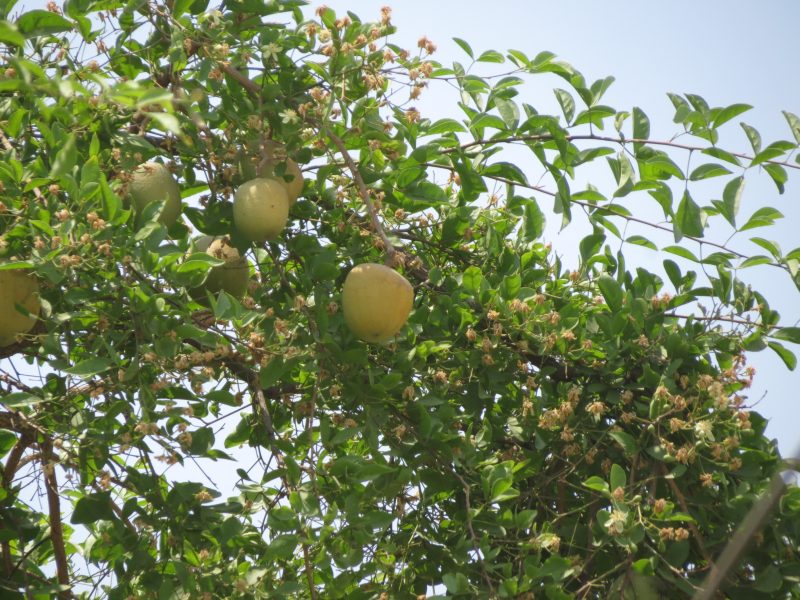
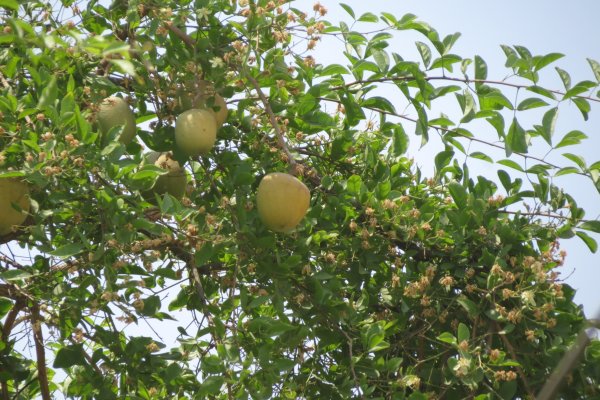
Beli (Aegle marmelos) may be the only medicine in Sri Lanka that works in both directions. The unripe fruit, sliced and dried, is a classic village remedy for diarrhoea and dysentery; the ripe fruit, eaten as a pulpy sherbet, gently relieves constipation. That double character — astringent when green, laxative when golden — has made the bael tree a fixture of home medicine across South Asia for well over two thousand years.
Botanical and Cultural Background
Bael is a small, thorny deciduous tree of the citrus family (Rutaceae), recognisable by its trifoliate leaves and its hard-shelled, woody fruit that must be cracked open like a coconut. The tree tolerates poor soils and long droughts, which is partly why it appears near villages and temples throughout the dry zone of Sri Lanka.
It is also a genuinely sacred tree. In Hindu tradition the trifoliate leaf is offered to Lord Shiva, and in Sri Lanka the tree is treated with unusual respect — old beli trees are rarely felled. The flowers, dried and known as beli mal, are the basis of one of the island's best-loved herbal drinks: a pale amber infusion served warm or cold as a cooling, thirst-quenching tonic.
Traditional Uses in Sri Lankan Medicine
Ayurvedic and Sinhala medical traditions assign each part of the tree its own role:
- Unripe fruit — the most important medicinal part. Sliced, sun-dried and boiled into a decoction for diarrhoea, dysentery and irritable digestion. Its astringent tannins and mucilage are thought to calm and protect the intestinal lining.
- Ripe fruit — the aromatic orange pulp, mixed with water or coconut milk and a little jaggery, is taken as a mild laxative and general digestive tonic.
- Beli mal (flowers) — brewed as a cooling drink for excessive thirst, burning sensations and mild gastritis; it is a common ingredient in Sri Lankan herbal porridges and teas.
- Leaves and root — used in compound preparations; bael root is one of the ten roots of the celebrated dashamula formulation.
What the Research Shows
Bael is among the better-studied plants of traditional South Asian medicine. Laboratory work has validated the leading traditional use: a decoction of the dried unripe fruit showed activity against infectious causes of diarrhoea, reducing bacterial adherence and the ability of toxins to bind the gut wall, and showing activity against Giardia and rotavirus in laboratory models (Brijesh et al., 2009).
Reviews of the plant's chemistry describe a rich mix of coumarins (notably marmelosin), alkaloids, polysaccharides and tannins, with laboratory evidence spanning antimicrobial, anti-inflammatory, gastroprotective and blood-sugar-related effects (Maity et al., 2009; Dhankhar et al., 2011). As with most traditional plants, the bulk of this evidence comes from laboratory and animal studies; large human trials are still lacking, so bael is best regarded as a well-supported traditional remedy rather than a proven drug.
How Beli Is Prepared
For an everyday beli mal drink, a small handful of dried flowers is simmered in a litre of water for ten minutes, strained, and taken warm or chilled, often with a little bee honey. For digestive complaints, thin slices of sun-dried unripe fruit are boiled until the water reduces by half. The ripe pulp is simply scooped, mashed through a sieve with water, and sweetened to taste — a drink many Sri Lankans remember from childhood.
Safety and Precautions
Beli is a food as much as a medicine and is generally well tolerated. A few cautions apply: large amounts of unripe fruit can be constipating (the very property that stops diarrhoea); diabetics should monitor blood sugar, since bael may add to the effect of glucose-lowering medicines; and, as with any concentrated herbal preparation, pregnant women should consult a physician before regular use.

Comments (0)
Leave a Comment