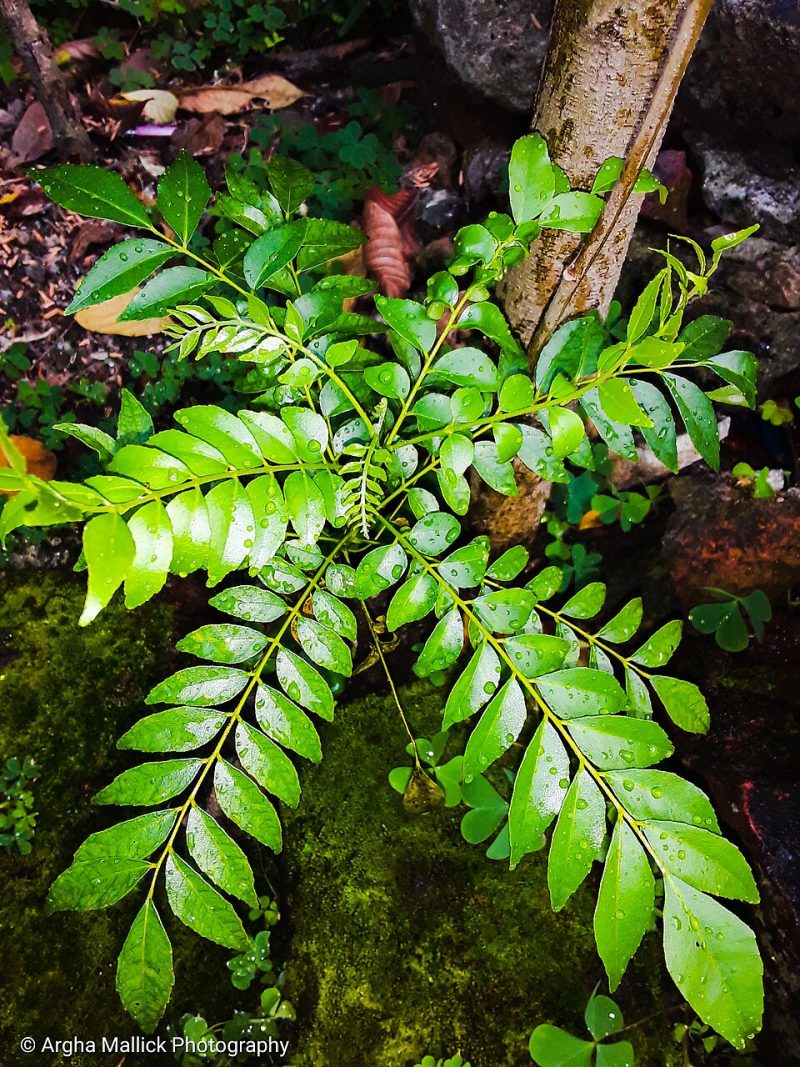
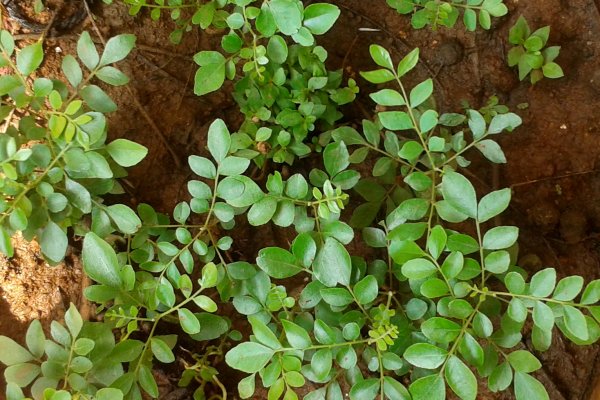
Karapincha (Murraya koenigii) suffers a peculiar fate: it is put into almost every Sri Lankan dish and then pushed to the side of the plate. The leaves that flavour the tempering are routinely discarded uneaten — which is a shame, because their pharmacology is more interesting than their reputation as garnish suggests.
Botanical and Cultural Background
Karapincha is a small tree of the Rutaceae family — the citrus family, which explains the aroma — with compound leaves of many small pungent leaflets, and clusters of small white flowers followed by black berries. It grows readily in Sri Lankan gardens and self-seeds where birds drop it.
It is the backbone of thel dama, the tempering that begins nearly every curry: leaves thrown into hot coconut oil with mustard seed and onion, releasing their oils in seconds.
Phytochemistry
The aroma comes from terpenes — pinene, sabinene, caryophyllene. The medicinal interest lies in a distinctive class of carbazole alkaloids largely unique to this genus: mahanimbine, koenimbine and mahanine, which carry most of the reported antioxidant and metabolic activity.
What the Research Shows
Cholesterol and lipids
Animal studies fairly consistently report that carbazole alkaloids lower total and LDL cholesterol and triglycerides. Birari and colleagues reported hypolipidemic and weight-reducing activity in animal models. Human evidence is limited.
Blood sugar
Extracts show hypoglycaemic effects in animal models, apparently by slowing starch breakdown and protecting pancreatic beta cells from oxidative damage. Small human studies exist; the evidence is preliminary.
Digestion
Carminative use is traditional and plausible; anti-ulcer activity has been reported in animal models.
The pattern here is familiar: encouraging animal work, thin human data. Karapincha is a nutritious, pleasant leaf with plausible metabolic activity — not a treatment for high cholesterol or diabetes.
How Karapincha Is Used
Thel dama: Leaves fried in hot coconut oil with mustard seed and onion.
Karapincha sambol: Raw leaves ground to a paste with coconut — the way to actually eat them rather than push them aside.
Kola kanda: Leaf juice in herbal porridge.
If you want any benefit beyond flavour, eat the leaves rather than discarding them.
Safety and Precautions
Karapincha is food and is safe for essentially everyone, including in pregnancy and for children. It is among the most benign plants covered on this site, and the sensible advice about it is simply to eat more of it.
The only meaningful caution concerns quantity. If you take diabetes medication and start consuming karapincha in large medicinal amounts — concentrated juice or supplements rather than curry leaves — be aware of a possible additive blood-sugar-lowering effect, and mention it to your doctor. The same applies to high cholesterol: karapincha is not a substitute for a statin if you have been prescribed one, and cholesterol is a silent, long-term risk that is not managed by feel.
Wash the leaves before use, particularly if bought rather than picked. Concentrated supplements have not been well studied for safety in pregnancy, so keep to culinary use.



Comments (0)
Leave a Comment