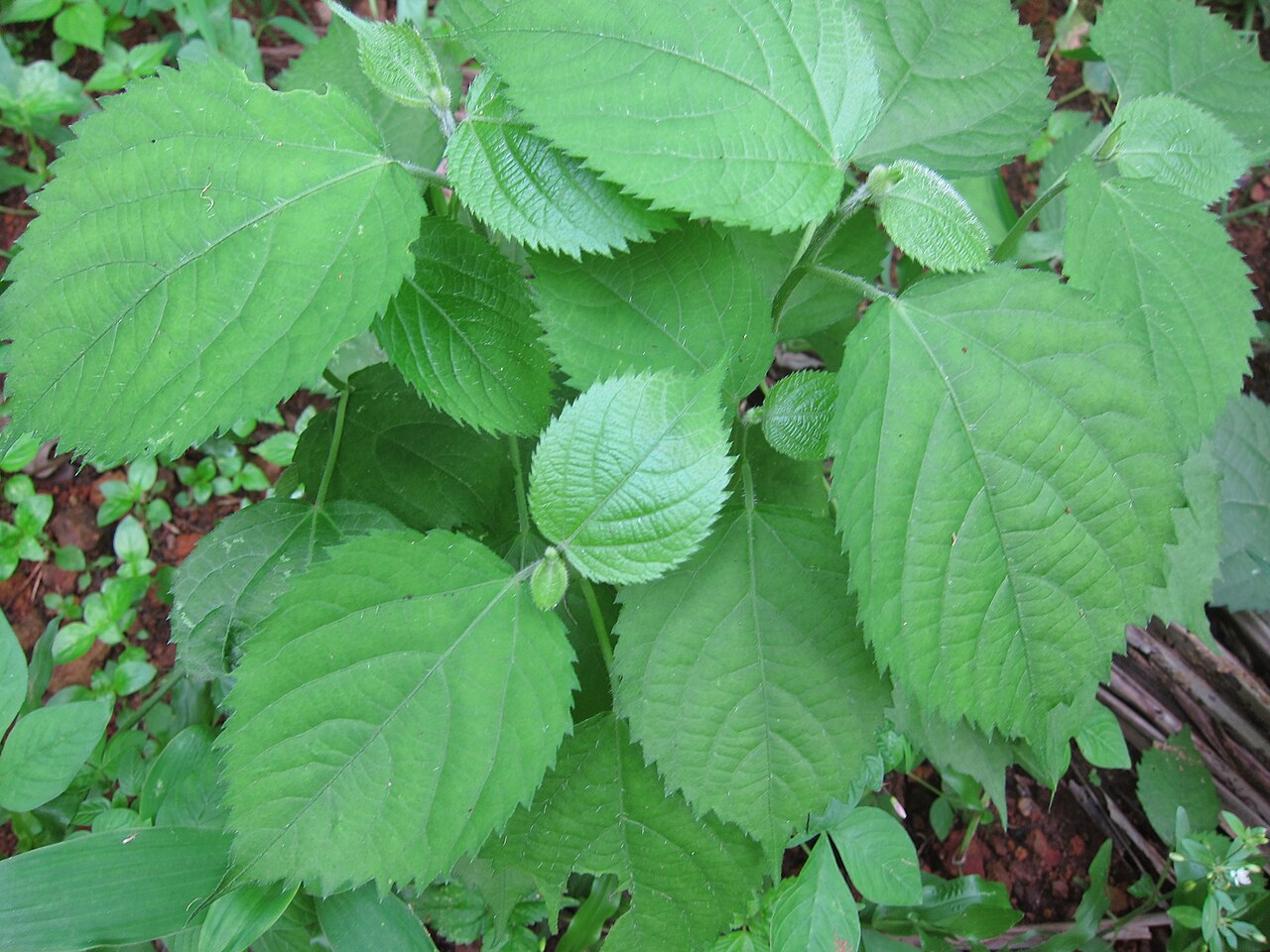
Wel Kahambiliya (Tragia involucrata) announces itself. Brush past it and the sting arrives instantly — a burning, itching weal that can last hours. It is a plant Sri Lankans learn to identify young and avoid thereafter, which makes its status as a respected medicine faintly absurd until you understand that processing changes everything.
Botanical and Cultural Background
Wel kahambiliya is a perennial twining herb of the Euphorbiaceae family, scrambling through scrub, forest edges and abandoned land. Its leaves and stems carry stinging hairs — trichomes — that work like tiny hypodermics, breaking off in the skin and injecting their contents.
Boiling or drying destroys the stinging apparatus completely, which is why the processed root and leaf can be handled and used at all.
Traditional Uses in Sri Lankan Medicine
Cough and chest complaints
Root decoction used traditionally as an expectorant.
Skin conditions
Taken internally as a raktashodhaka for chronic skin disease.
Joint pain
Processed root paste applied externally, or decoction taken.
Fever
Used as a diaphoretic to promote sweating.
What the Research Shows
Research on Tragia involucrata reports anti-inflammatory, analgesic, antimicrobial and antioxidant activity in laboratory and animal models, and the plant contains flavonoids, tannins and alkaloids. The sting itself comes from histamine and other irritants delivered by the trichomes — an efficient mechanical defence that has been well characterised in stinging plants generally.
Human clinical evidence is absent, and both the antimalarial and the asthma claims attached to this plant should be dropped.
How It Is Prepared
Decoction: Dried or boiled root — never raw plant — simmered and strained. Boiling neutralises the stinging hairs.
External paste: Processed root ground and applied.
Handle the fresh plant with gloves, or not at all.
Safety and Precautions
Do not treat asthma with this or any herb. Wel kahambiliya has a traditional reputation for asthma and chronic bronchitis, but asthma kills, a reliever inhaler is not optional, and worsening breathlessness needs urgent care rather than a decoction. If your inhaler is needed more often than usual, that is a warning sign to act on.
It does not treat malaria. Malaria needs a blood test and antimalarial drugs. Sri Lanka is certified malaria-free, so a malarial fever here means an imported case — travel history and testing, promptly.
If you are stung by the fresh plant, the reaction is usually self-limiting: wash the area, avoid rubbing it further into the skin, and a cool compress or antihistamine helps. Seek help if there is spreading swelling, difficulty breathing, or symptoms beyond the contact area — genuine allergic reactions to stinging plants occur.
Only properly processed material should be used medicinally, and internal use belongs under a qualified practitioner's guidance. Avoid it in pregnancy and breastfeeding. Persistent skin disease deserves a diagnosis: eczema and psoriasis have real treatments, and years spent on blood-purifying decoctions are years those treatments are not working.

Comments (0)
Leave a Comment